 Deutsch

Autonomous grinding eliminates production bottlenecks in bridge manufacturing
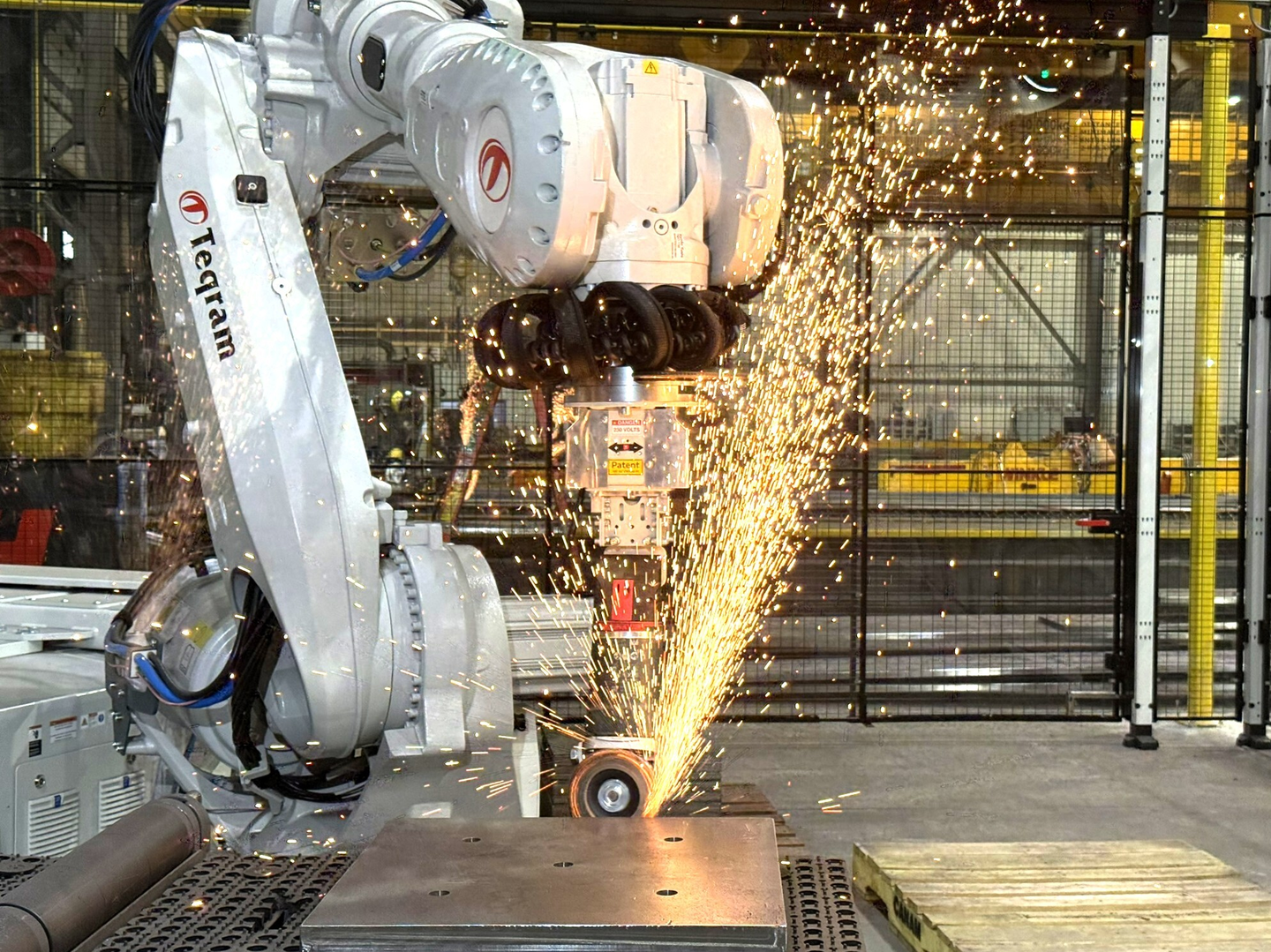
CANAM Bridges automated the post-processing of plasma- and oxy-fuel-cut steel components using the Teqram EasyGrinder.
The autonomous grinding robot removes bottlenecks in the deburring process, increases throughput, and ensures consistent surface quality — while significantly reducing the physical workload for operators.
Key facts at a glance
The customer
CANAM Bridges is one of North America's leading manufacturers of steel bridge structures. The company delivers complex infrastructure projects across Canada and the United States and supplies a wide range of public and industrial clients.
Production involves large structural components, strict quality requirements, and demanding project timelines. Multiple large infrastructure projects often run in parallel, requiring a reliable and scalable manufacturing process.
The challenge
In bridge fabrication, the post-processing of thermally cut parts is a critical step in the production workflow.
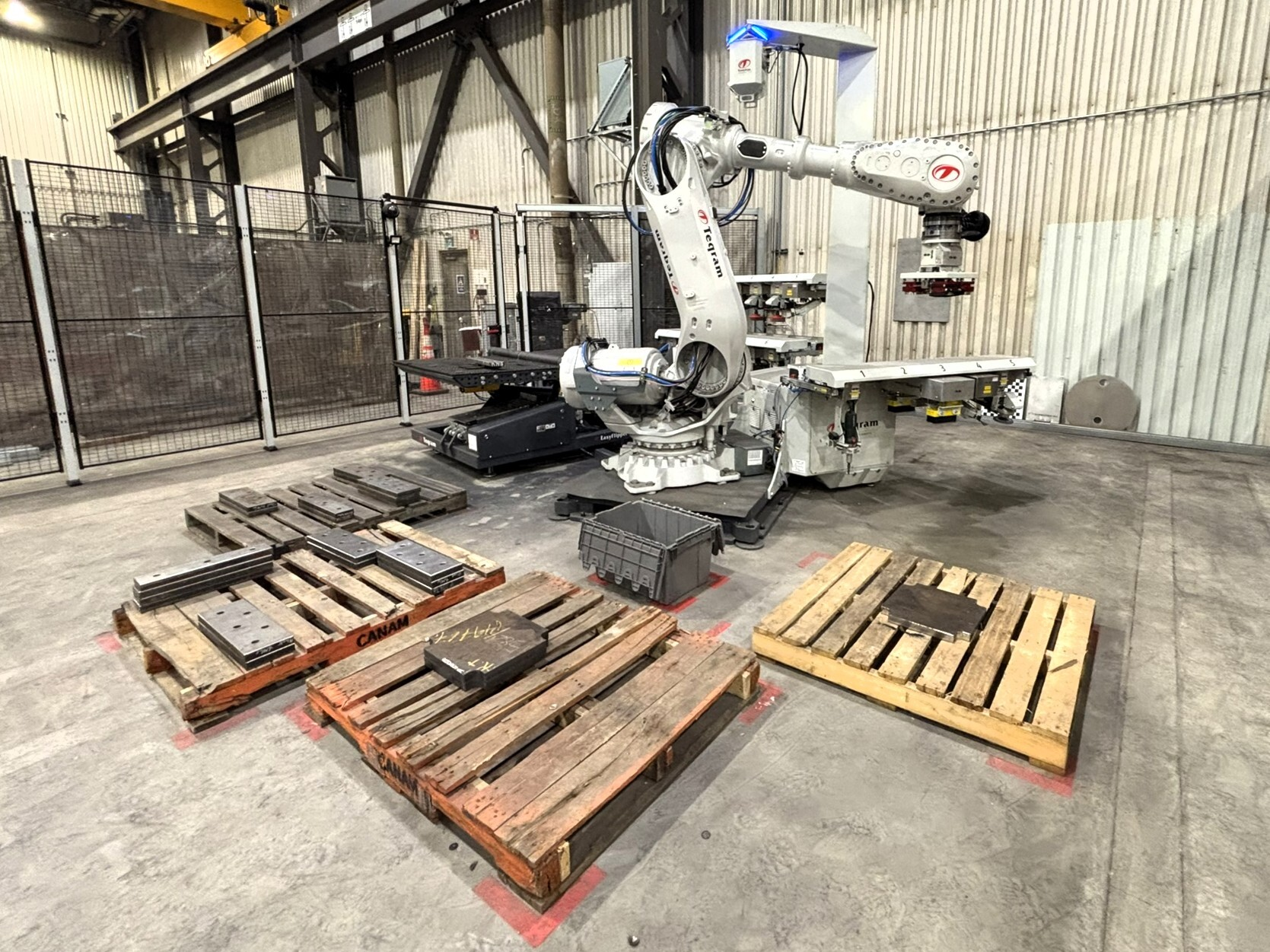
CANAM Bridges processes approximately 300 tons of cut steel components every week, all of which require deburring and surface finishing after cutting.
At peak demand, 16–18 grinding operators worked across three shifts to:
- remove slag
- round edges
- grind heat-affected zones
Manual grinding was physically demanding, generated significant dust, and became increasingly difficult to scale as production volumes grew.
As project demand increased, deburring became a major production bottleneck.
CANAM Bridges therefore began searching for an automated solution that could improve throughput, stabilize the process, and improve workplace safety.
The solution
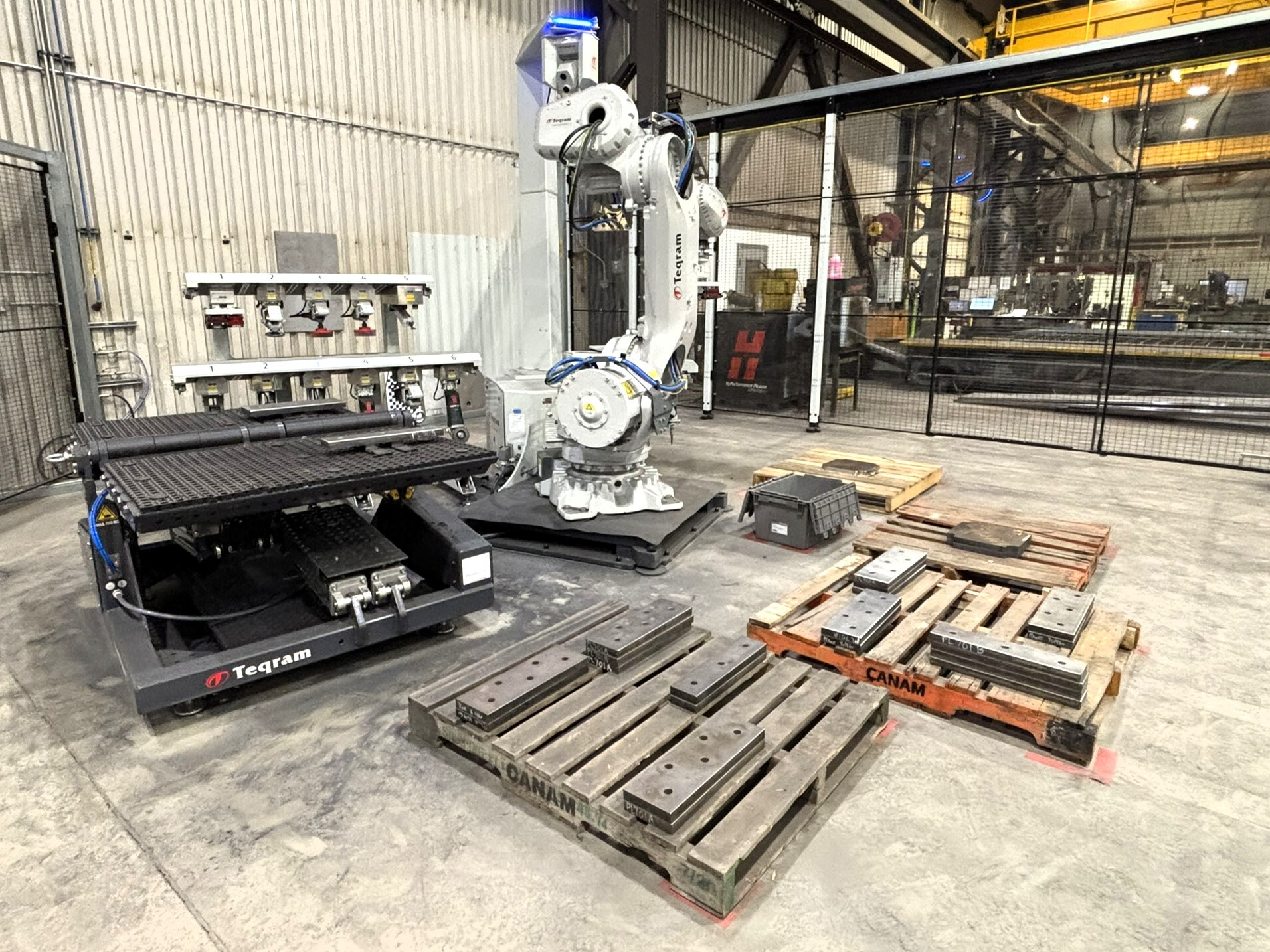
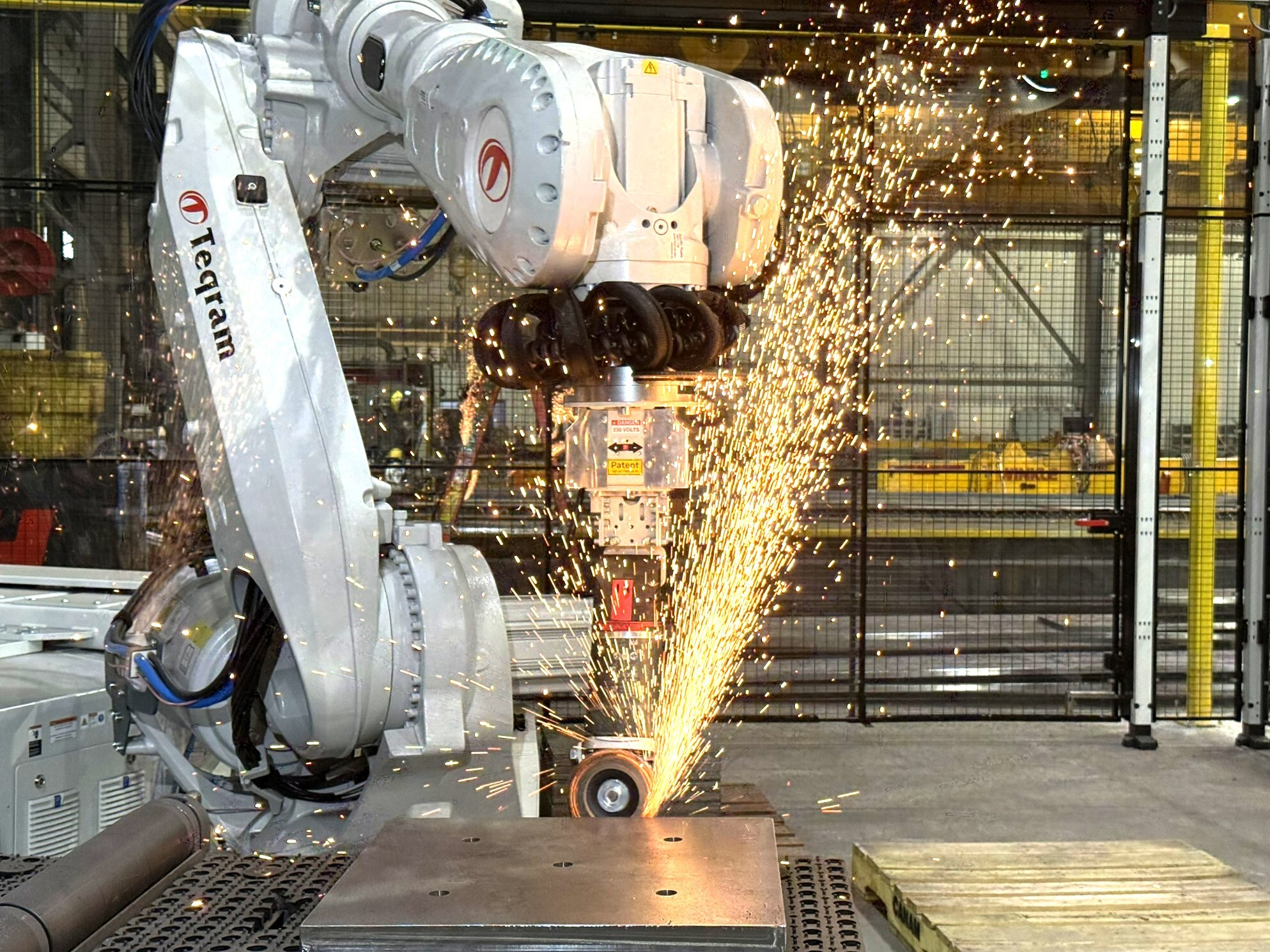
With the Teqram EasyGrinder, CANAM Bridges automated the post-processing of small and medium-sized steel components.

The autonomous grinding robot performs:
- automatic deburring of cut parts
- removal of slag and oxide layers
- grinding of heat-affected zones
- edge rounding up to 2 mm (0.08 in)
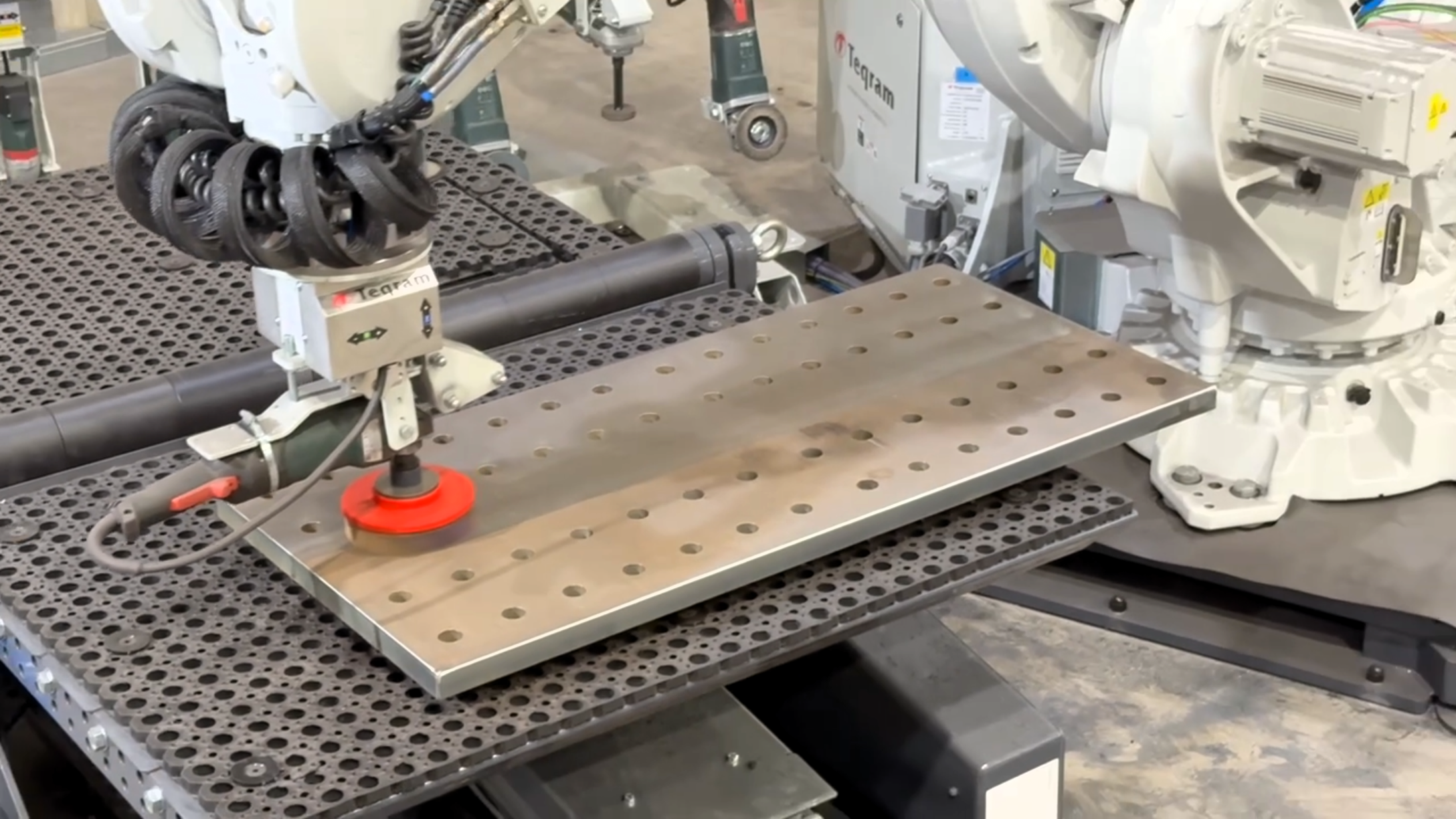
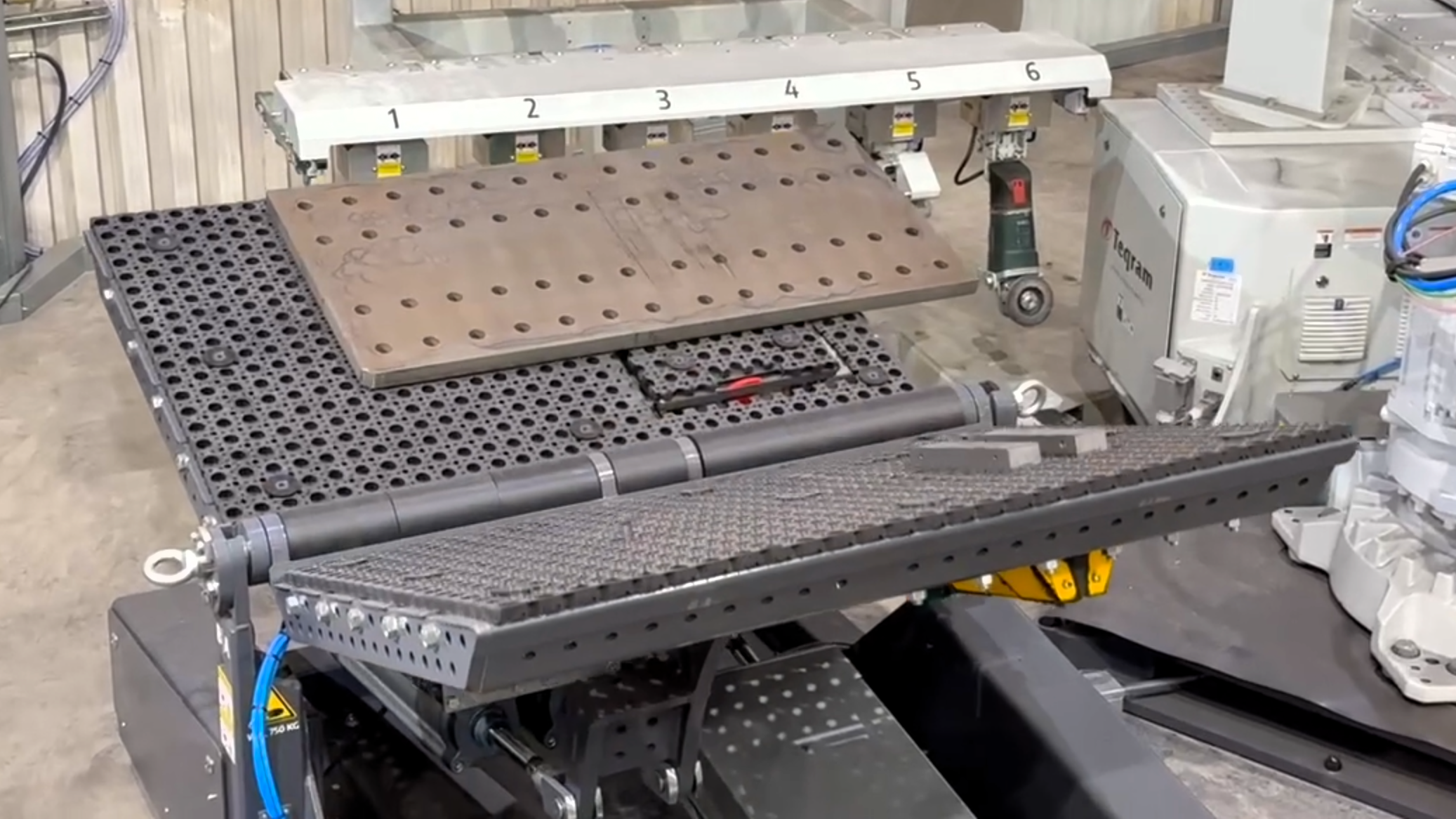
Thanks to AI-powered vision technology, the system automatically detects part geometries and processes varying shapes, individual parts, and small batch sizes without programming.
The automation significantly reduces labor requirements.
Instead of multiple grinding technicians, the system is supervised by a single operator.
The results
Implementing the EasyGrinder delivered immediate improvements at CANAM Bridges:
- elimination of the grinding bottleneck in production
- significantly higher processing speeds
- consistent and repeatable quality across all shifts
- improved ergonomics for operators
- more reliable production planning for large infrastructure projects
Deburring is no longer the limiting factor in the production process.
Why Teqram
CANAM Bridges selected Teqram because of the combination of autonomous robotics, AI-based part recognition, and intuitive operation without programming.
The EasyEye vision system enables flexible processing of varying geometries, making the solution particularly well suited for the dynamic production environment of bridge fabrication.
Additional advantages included:
- high processing speed
- seamless integration into existing workflows
- strong technical collaboration with the Teqram team during the project
Conclusion
With the EasyGrinder, CANAM Bridges successfully eliminated a major bottleneck in the deburring process.
Automated post-processing increases throughput, improves process stability, and provides a scalable foundation for future automation in steel bridge manufacturing.
More Information
For additional information, please use the contact form below or reach out through any of our other contact options.
