 Deutsch

Flip Plastic Parts Without Distortion
Injection-molded and thermoformed parts often retain internal stresses from the manufacturing process. Supporting or clamping them at isolated points during flipping can cause the very distortion you are trying to prevent.
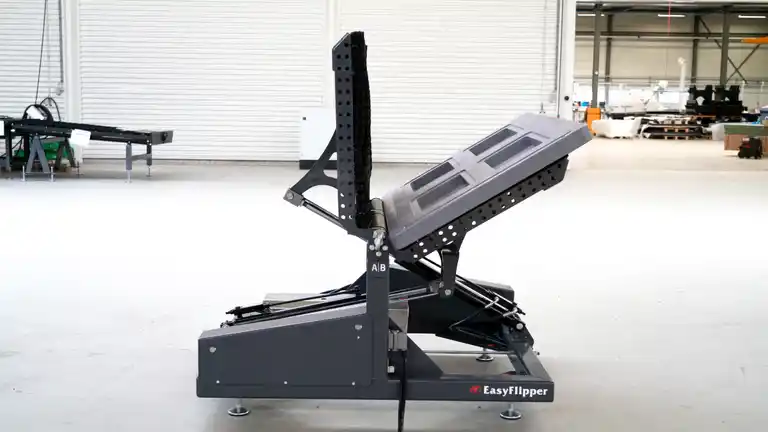
The EasyFlipper turns the part 180 degrees while keeping it fully supported throughout the process—without clamps, lifting slings, or custom fixtures.
How Plastic Parts Are Flipped Today
An overview of common methods used in plastics manufacturing and their typical drawbacks.
Rotates injection molds around a fixed axis using electric or hydraulic power.
Secures the part from the side using eccentric or pin clamps.
Lifts the part and turns it while suspended.
The part remains fully supported and is rotated 180° without being suspended—no clamps or rigging attachment points required.
How the EasyFlipper Changes the Way You Flip Plastic Parts
The difference is most apparent during the flipping process itself.
Conventional Methods
- The center of gravity must be determined before attaching the rigging
- The part hangs suspended during rotation or is clamped from the side
- Finished surfaces come into contact with clamping jaws or lifting slings
- Flipping equipment is often custom-built for one specific part
With EasyFlipper
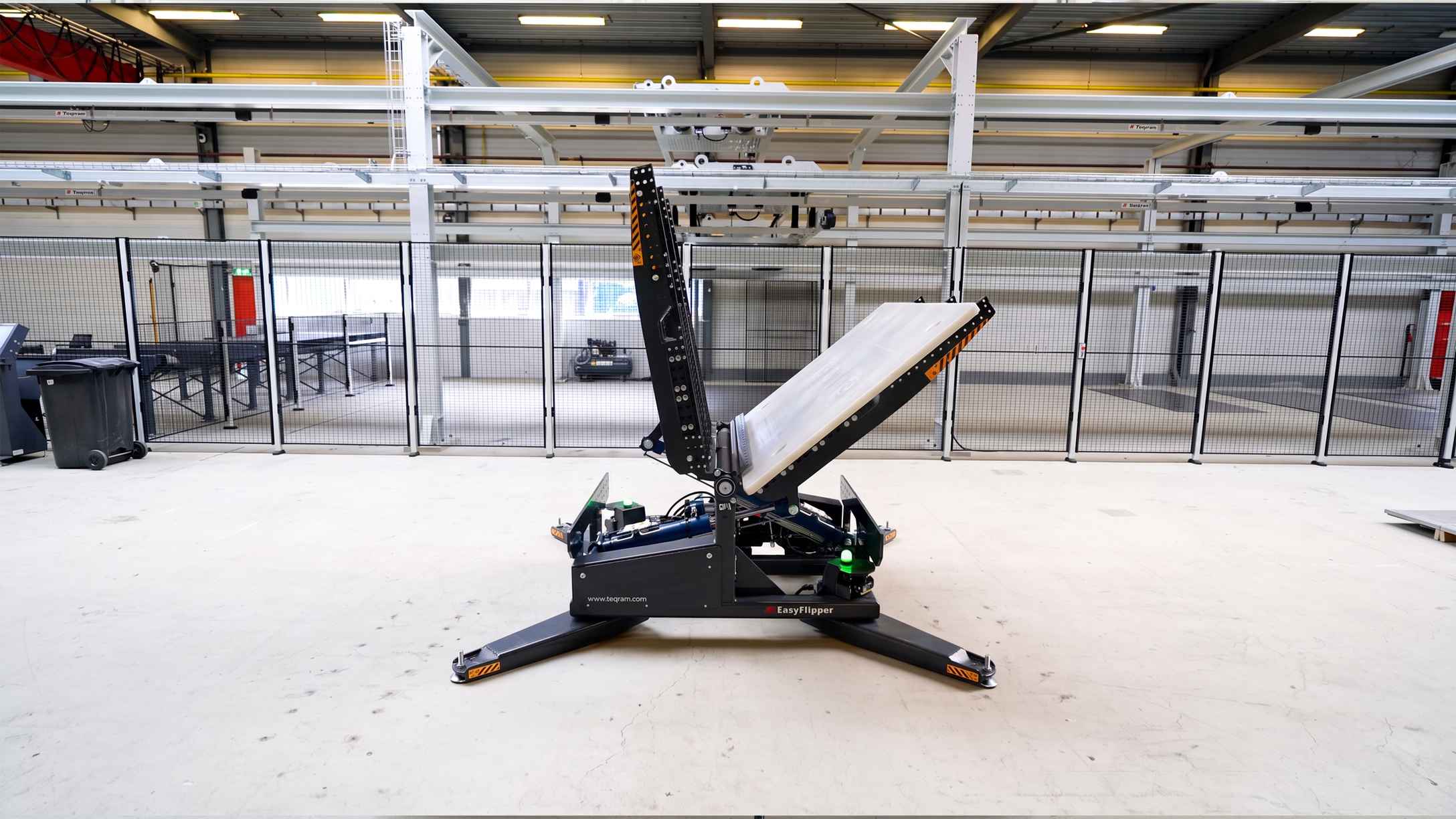
- The part remains fully supported on the padded tabletop
- No suspended phase – the tabletop supports the part throughout the entire rotation
- Finished surfaces come into contact only with the soft padding
- Extension arms allow one table to accommodate a range of part sizes
Frequently Asked Questions About Flipping Plastic Parts
-
Parts are typically flipped immediately after demolding when both sides require additional machining, such as milling or deburring. Another common point is before quality inspection, when cosmetic surfaces need to be checked.
Ready to Flip Heavy Plastic Parts Safely?
