Weld Beveling Explained: Methods, Benefits, and Automated Robotic Beveling

Proper weld beveling is the foundation of every strong, reliable weld. A precisely machined bevel improves weld quality, increases consistency, and helps reduce production costs while ensuring long-lasting structural performance.

On this page, you'll learn what weld beveling is, why it matters, the most common bevel types, and how they're produced. You'll also discover how the Teqram EasyGrinder automatically bevels flame-cut, plasma-cut, and laser-cut parts of virtually any size, without programming or manual setup.

Custom Request All contact options

What Is Weld Beveling?

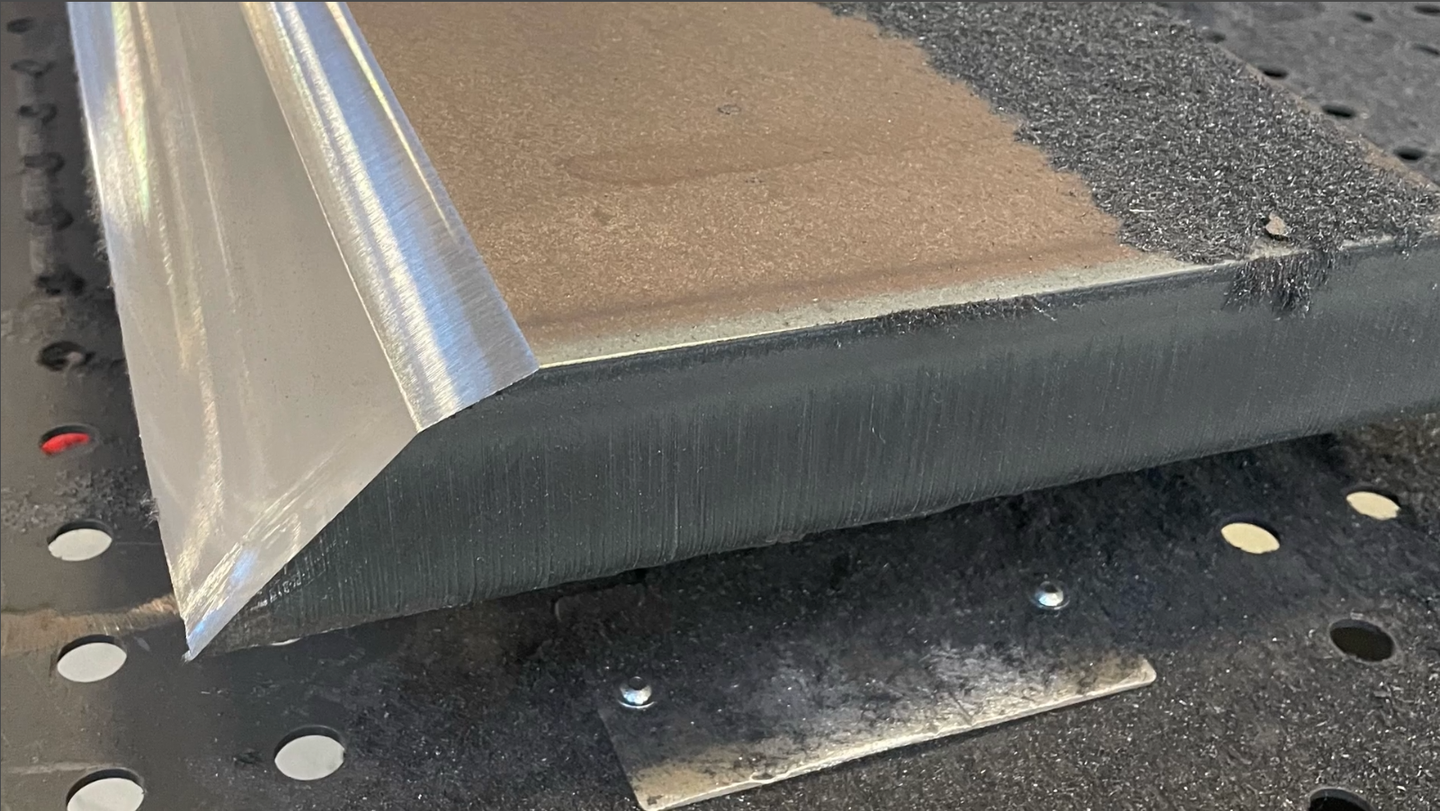
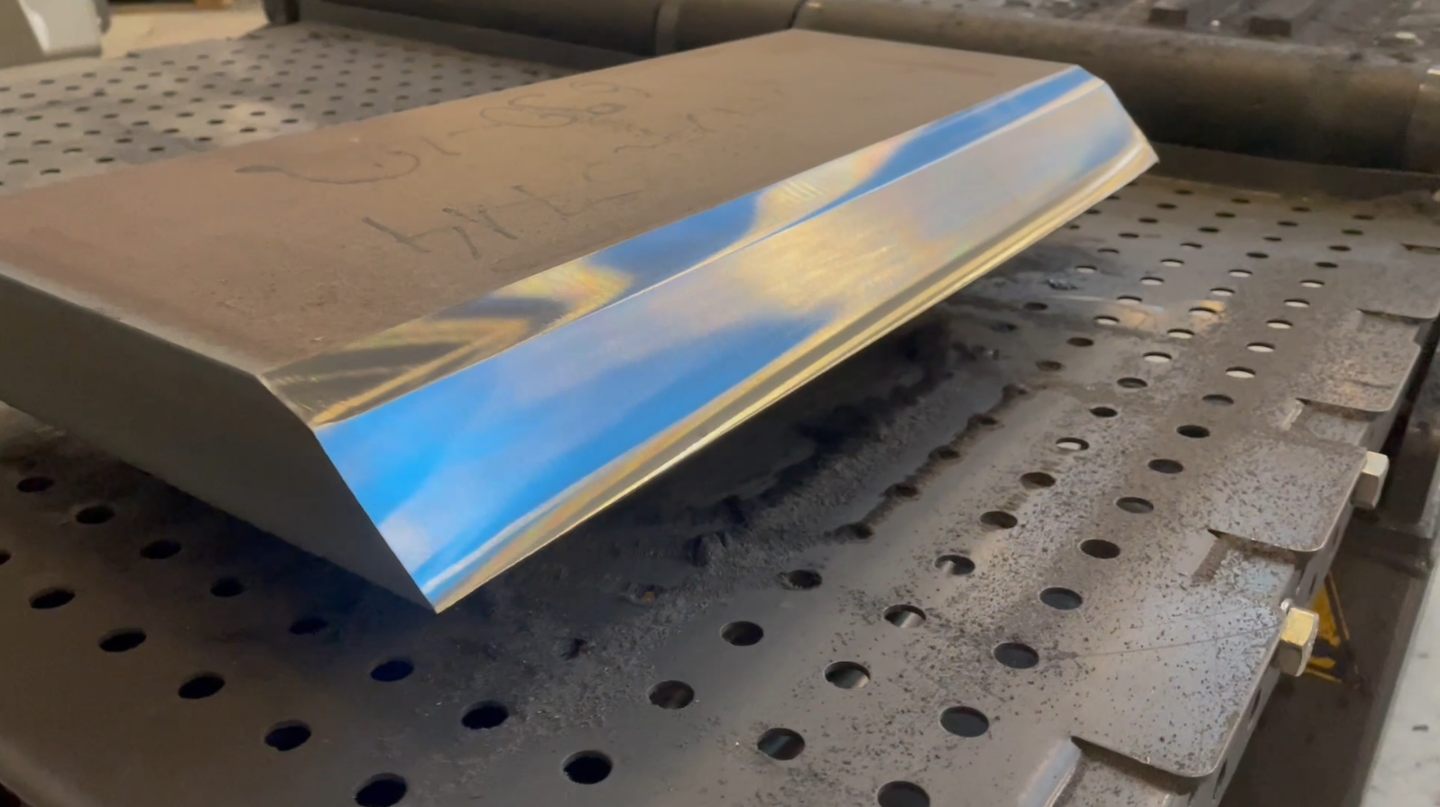
Weld beveling prepares metal edges to create stronger, more consistent welds. A properly machined bevel improves penetration, joint quality, and overall weld performance.

Three factors determine a successful weld:

  • Proper Bevel Geometry: The right angle and edge profile for optimal weld penetration.
  • Clean Surfaces: Remove scale, slag, oxides, and other contaminants before welding.
  • Accurate Fit-Up: Properly prepared mating surfaces ensure consistent weld quality.

The goal is simple: achieve full weld penetration and build strong, reliable welds.

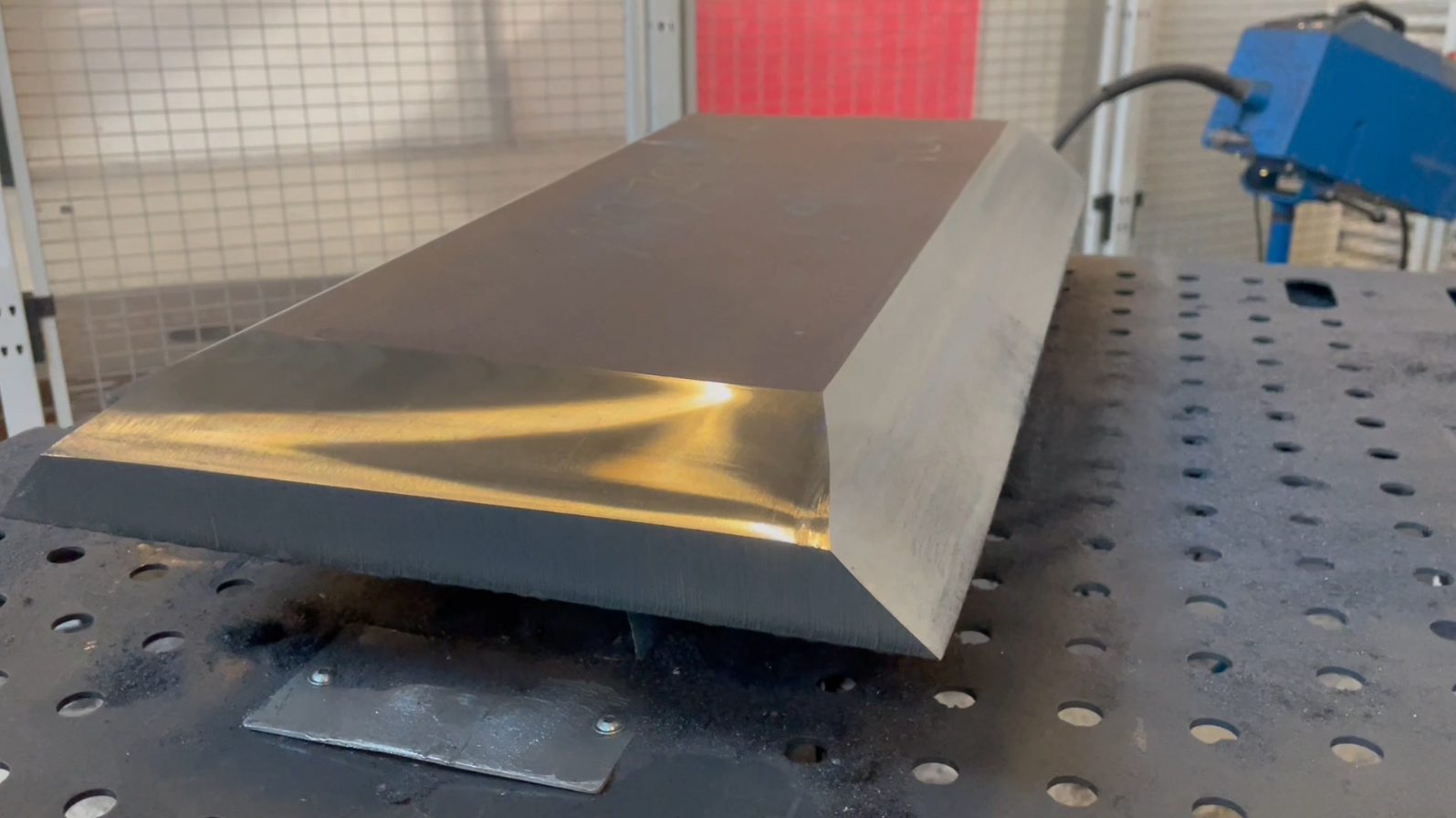
Schweißnaht-Vorbereitung mit Fase – bearbeitete Kante

Common Weld Bevel Types

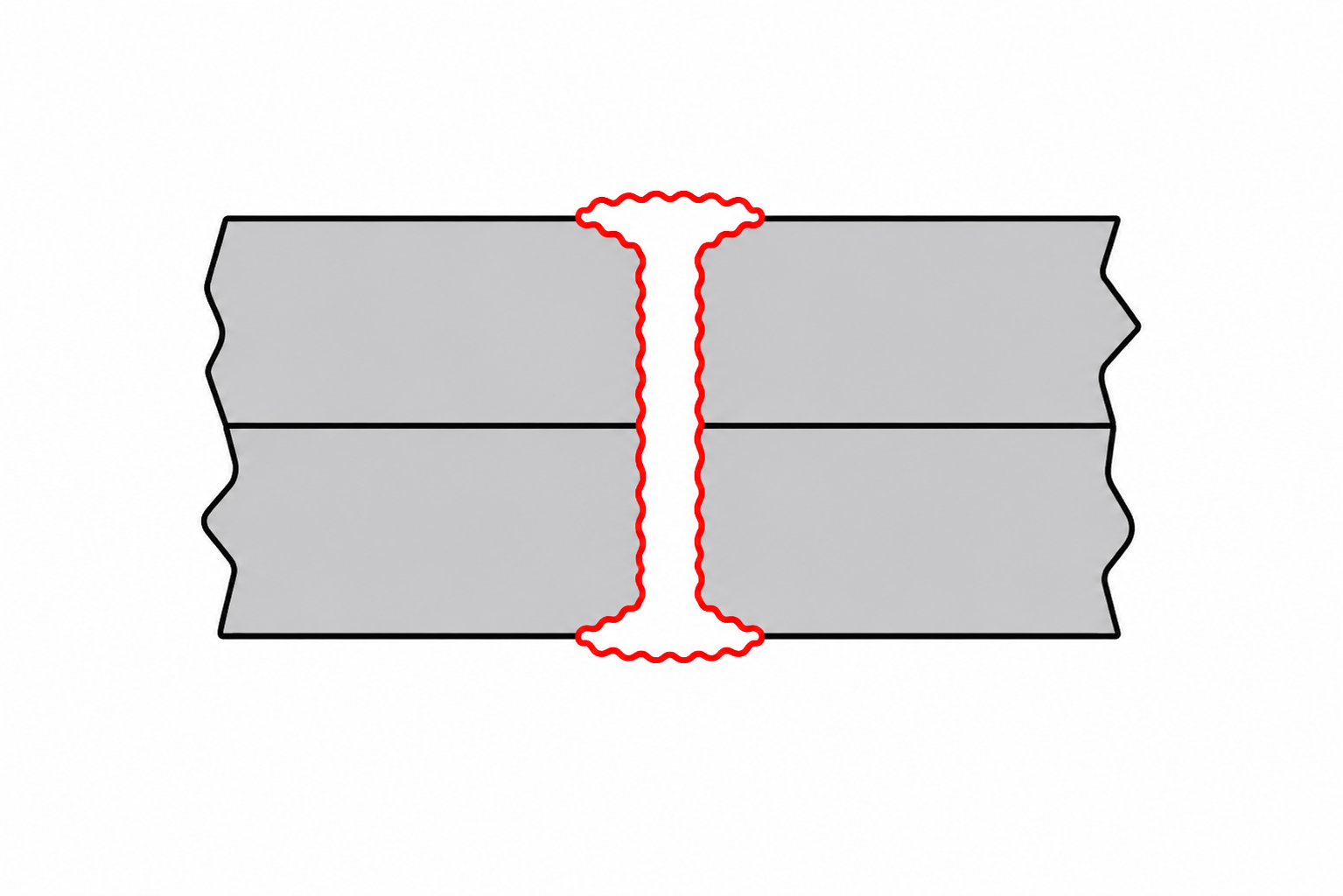
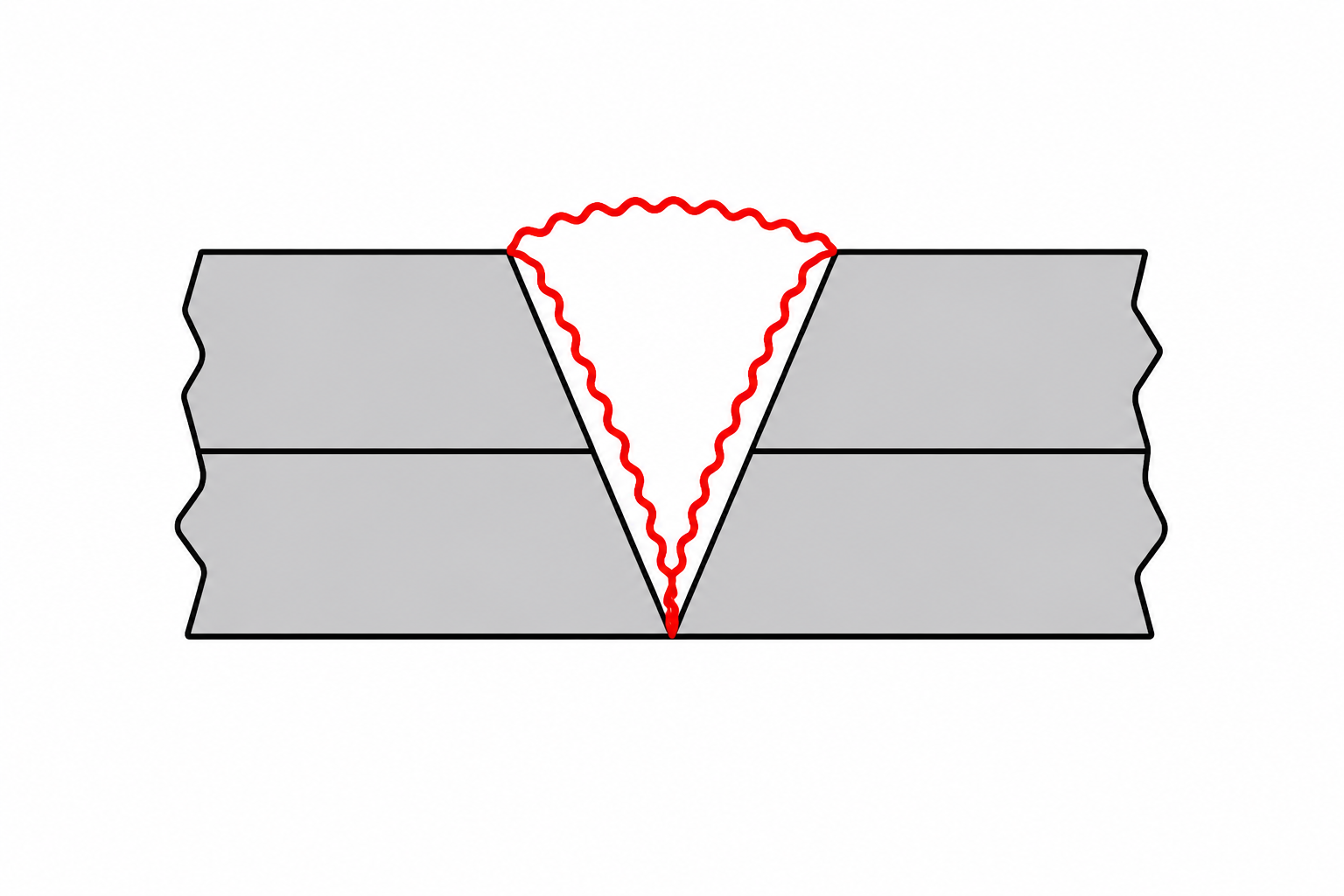
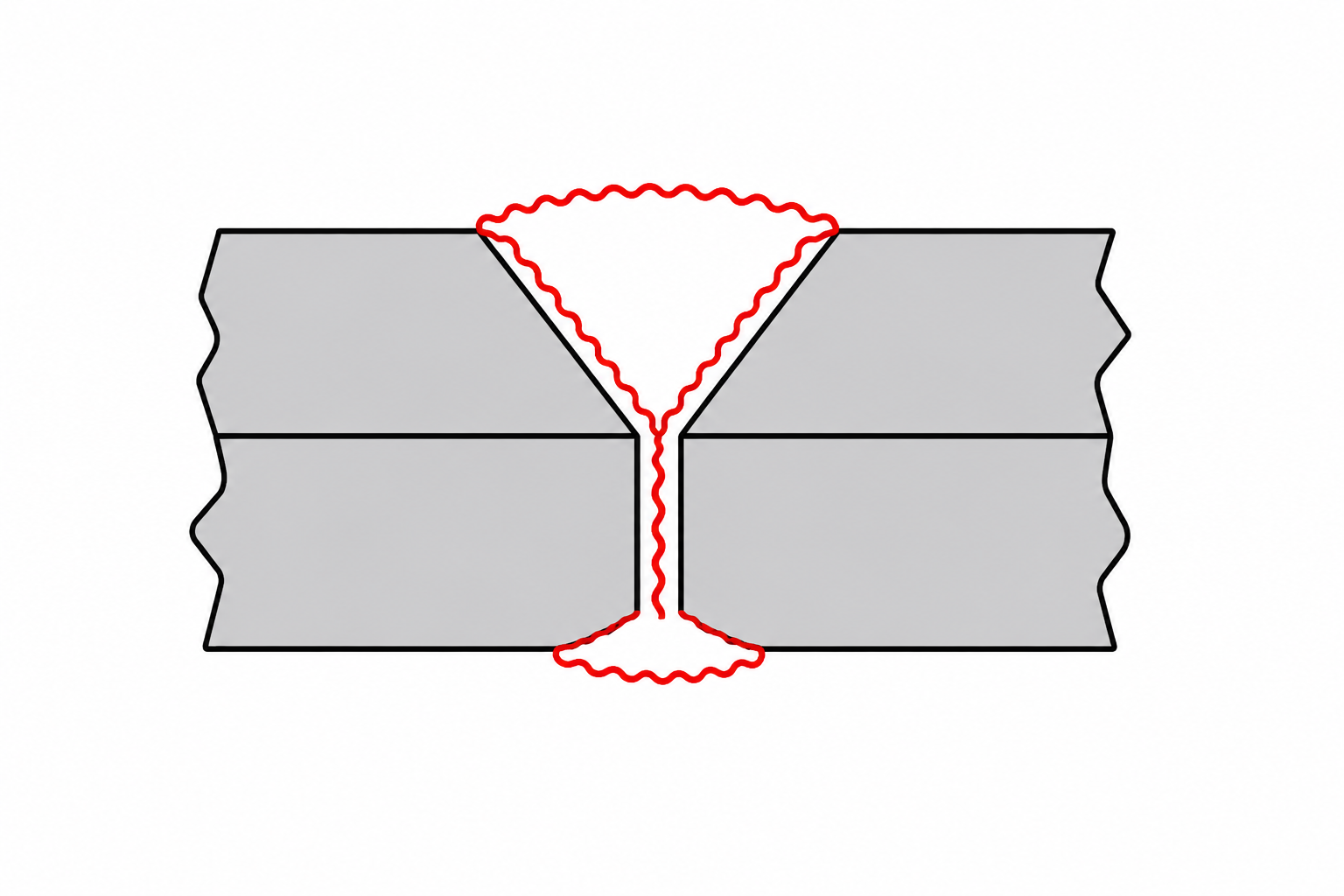
Selecting the correct weld bevel depends on material thickness, welding process, joint accessibility, and the required weld strength. The table below shows the most common bevel types used in industrial applications.

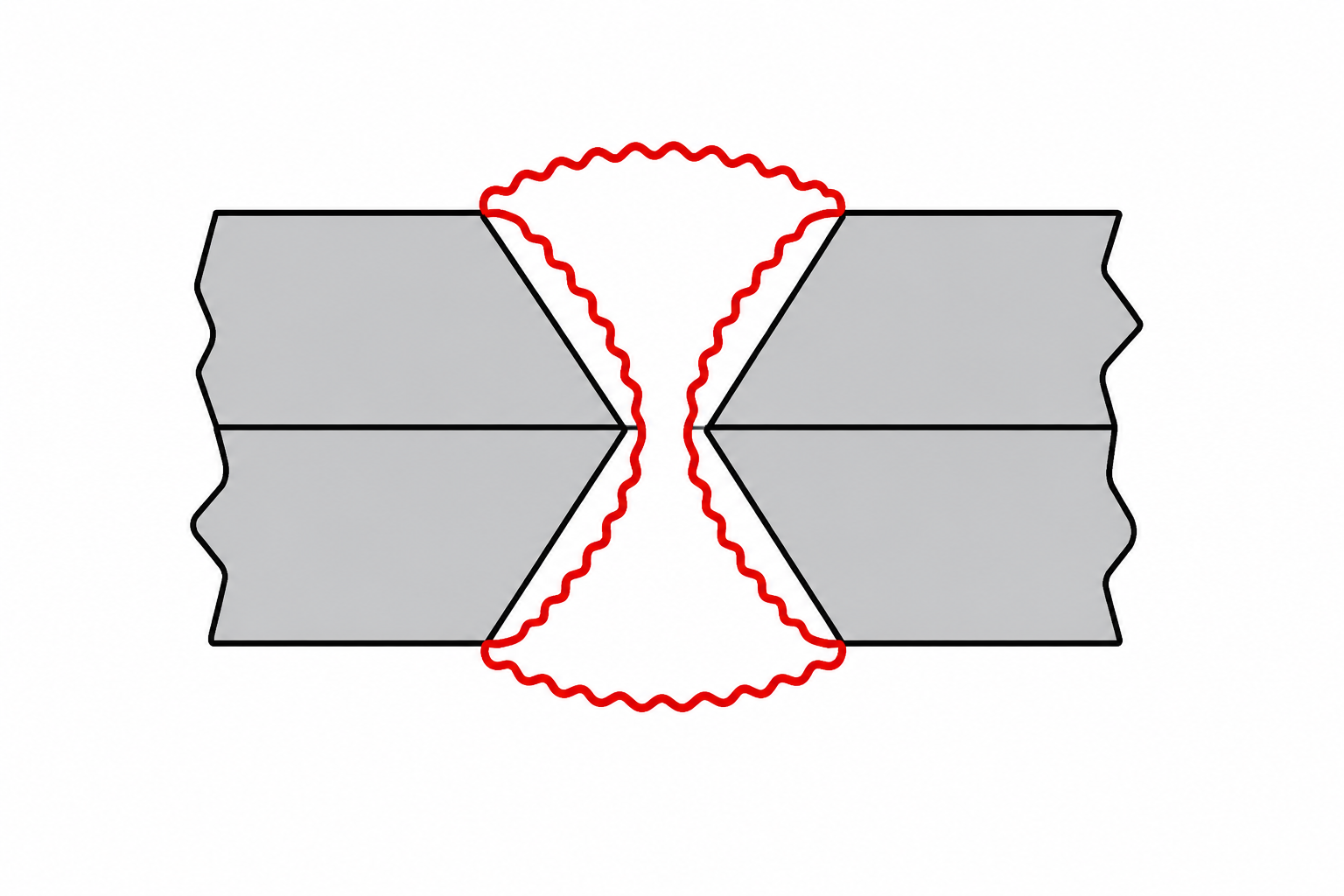
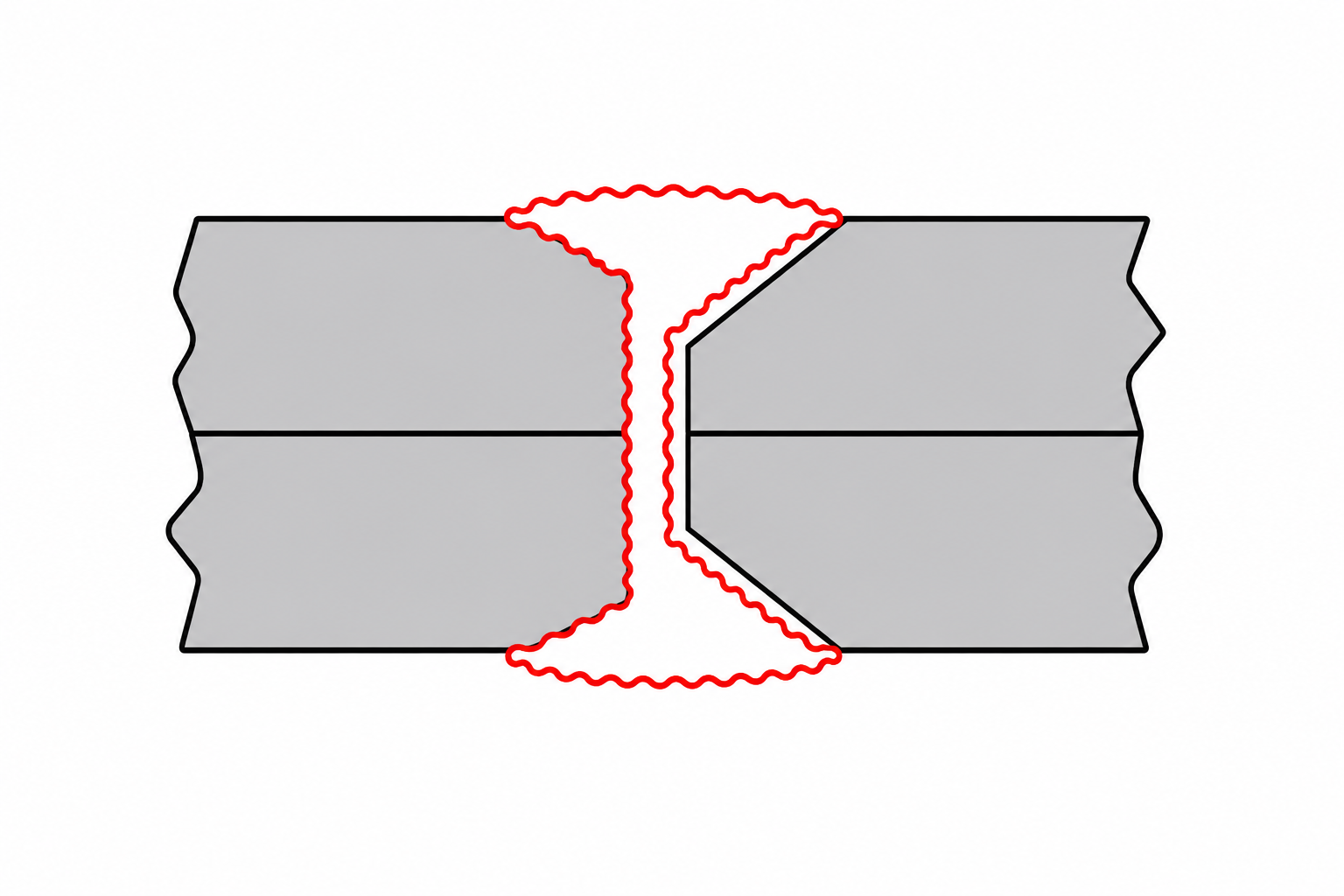
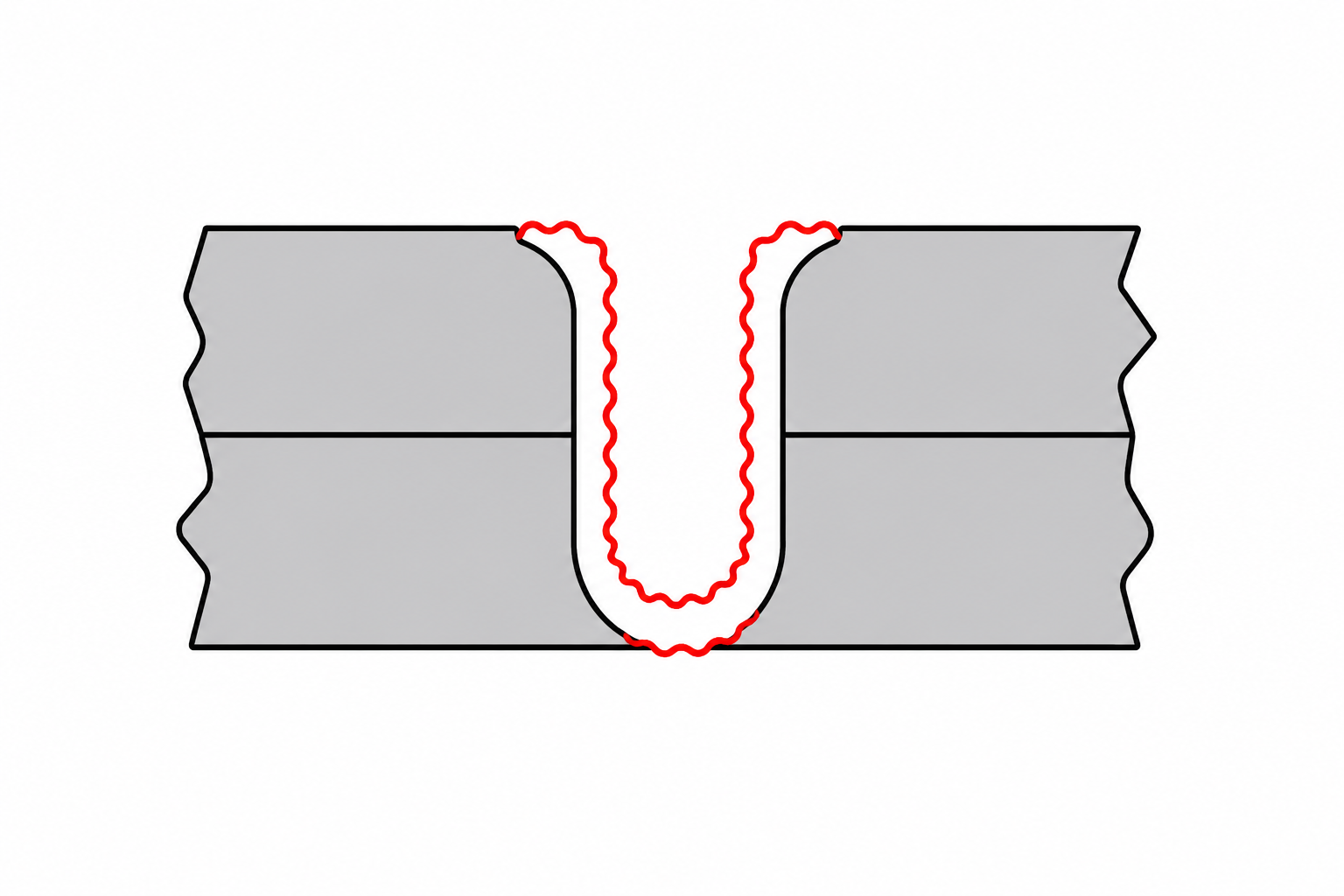
Bevel Type Bevel Profile Description Typical Application Key Characteristics
Square Groove Square groove bevel profile No bevel required Less than 4 mm (5/32 in.); simple butt joints No material removal; suitable only for thin material
V-Groove V-groove bevel profile Single-sided bevel (30°–45°) 4–15 mm (5/32–19/32 in.); the most common bevel type Good accessibility and weldable from one side
Y-Groove Y-groove bevel profile V-groove with a root face 4–15 mm (5/32–19/32 in.); improved root control The root face improves root formation and reduces burn-through
Double V-Groove Double V-groove bevel profile Double-sided V-groove More than 12 mm (15/32 in.); symmetrical joints Requires less weld metal than a single V-groove and can be welded from both sides
Double Bevel Groove Double bevel groove profile Double bevel on one member More than 10 mm (3/8 in.); when access is limited to one side An efficient option when joint accessibility is limited
U-Groove /
Double U-Groove
U-groove bevel profile Curved groove profile Heavy plate applications above 20 mm (25/32 in.) Minimizes weld metal volume but requires more complex edge preparation

Typical bevel angles range from 30° to 45°, depending on the joint design and welding process. Automated robotic beveling requires tighter tolerances to ensure consistent weld quality. Bevel angle tolerances of approximately ±1° to ±2° are commonly used.

Request Your Automated Weld Beveling Solution

ContactBot_Teqram_1000x1000

Upload any relevant sketches, drawings, or other supporting documents here

Weld Beveling Methods

The ideal beveling method depends on the material, part geometry, production volume, and required tolerances. Each method offers distinct advantages and is best suited to specific applications.

Mechanical Beveling
(Grinding & Milling)

One of the most widely used methods for weld preparation. The ideal process depends on the required edge quality, production volume, and material thickness.

  • Milling machines for highly repeatable production
  • Stationary or portable edge milling machines for straight edges
  • Angle grinders for one-off parts and rework
  • Portable beveling machines for fast, cost-effective edge preparation

Produces precise bevels without a heat-affected zone (HAZ), making it ideal for consistent production quality.
Thermal Beveling
(Plasma, Oxy-Fuel & Laser)

The bevel is created during the cutting process, making this an efficient solution for many production environments.

  • 3D plasma cutting: up to 40 mm (1-9/16 in.), including curves and contours
  • 3D laser cutting: high precision for material up to 20 mm (25/32 in.)
  • Oxy-fuel cutting: economical for heavy plate applications
  • Manual flame cutting: cost-effective but less precise

Creates a heat-affected zone (HAZ). Slag and oxides typically require secondary processing.

CNC Machining

For high-precision or complex components, bevels can be machined directly on CNC machining centers.

Most economical when CNC machining is already part of the manufacturing process. Provides excellent dimensional accuracy and repeatability but generally comes with higher machining costs and longer cycle times.

Automated Robotic Beveling

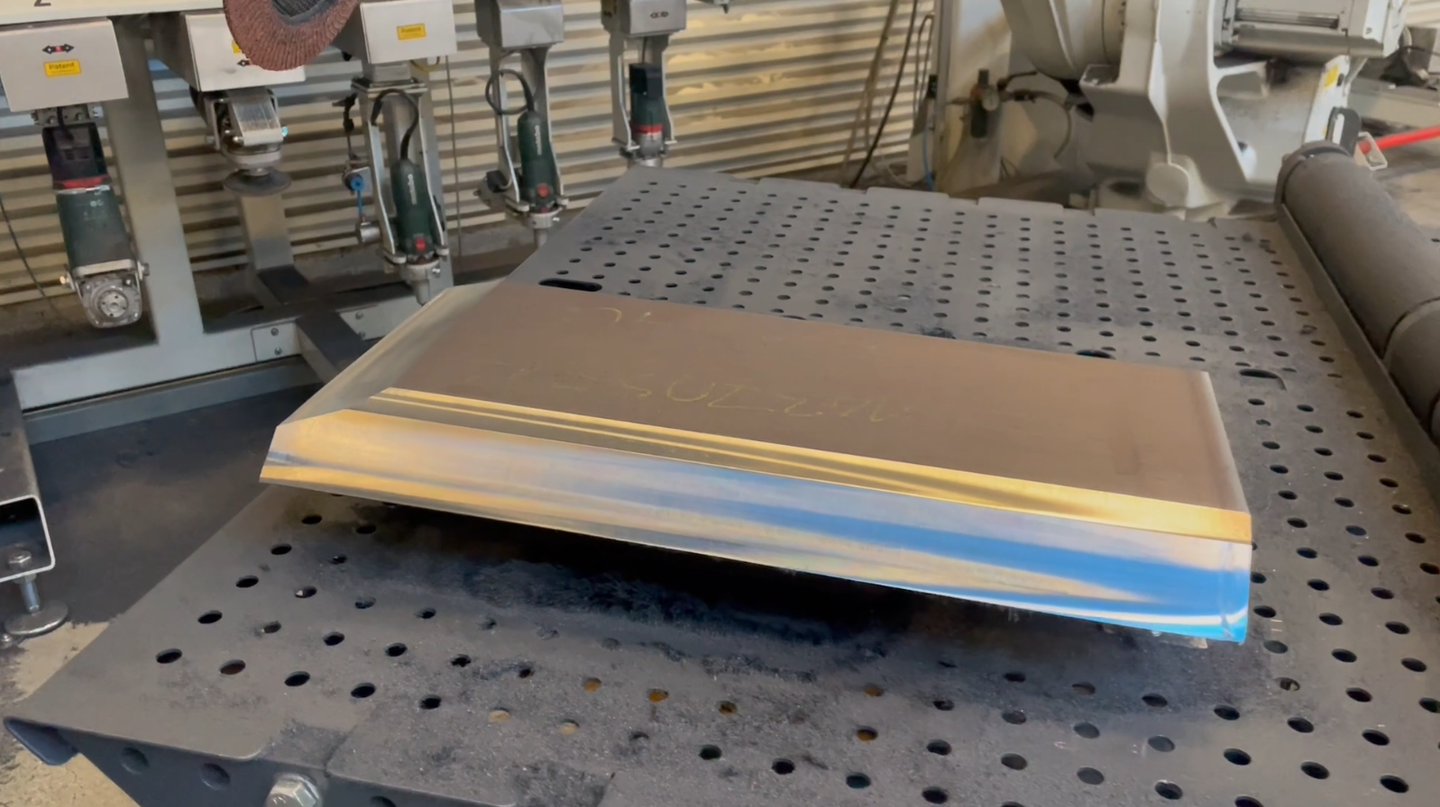
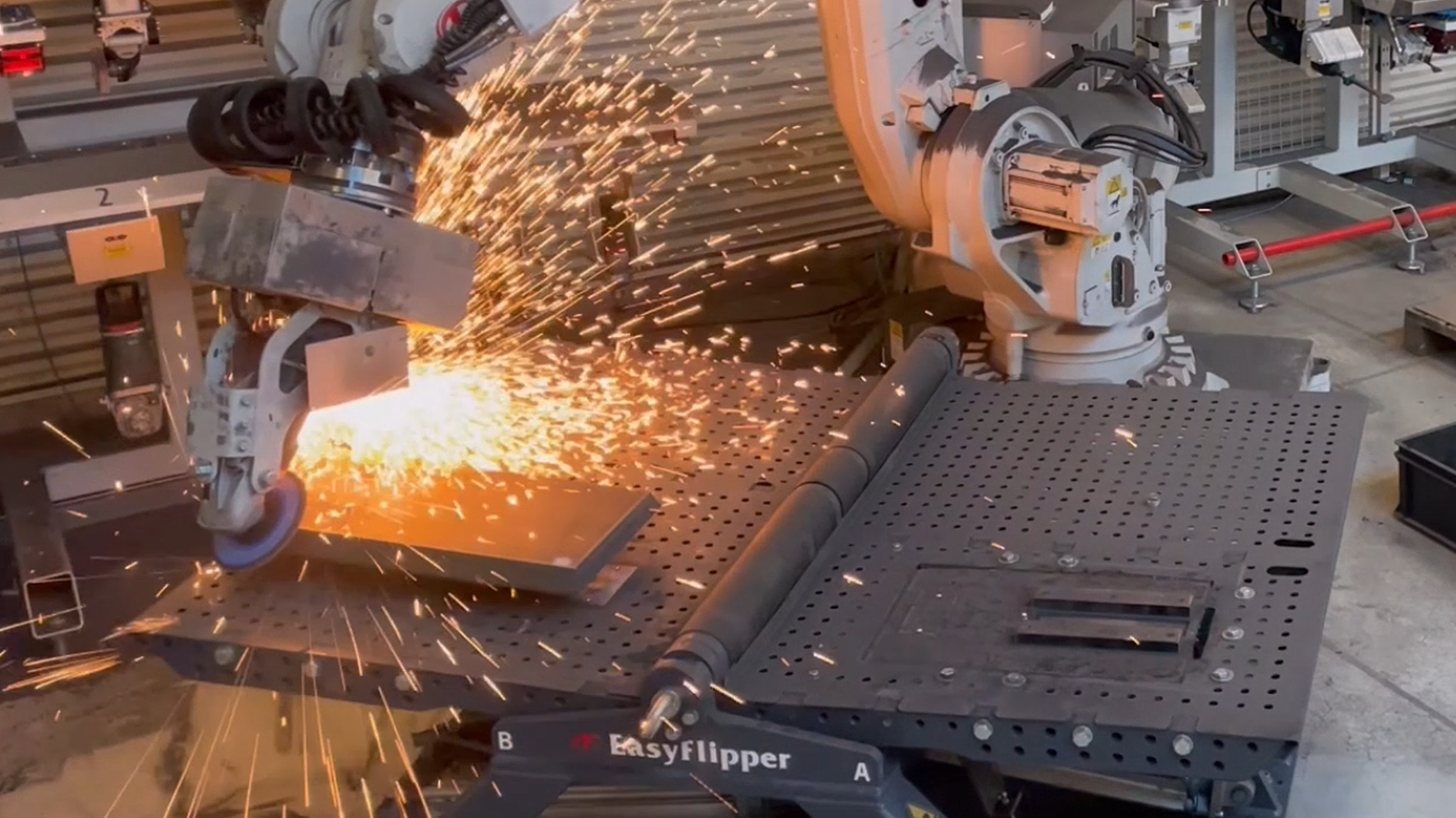
Automated robotic beveling is the latest advancement in weld preparation. Using advanced machine vision, the system automatically identifies each part and produces precise, repeatable bevels without programming or manual teaching. Designed for flame-cut, plasma-cut, and laser-cut parts, the Teqram EasyGrinder delivers consistent bevel quality, increases productivity, and reduces manual labor.

Comparing Weld Beveling Methods

Method Manual Effort Precision Part Geometry Heat-Affected Zone (HAZ) Automation Level
Manual Grinding, Milling, or Flame Cutting High High Straight edges None Manual
3D Plasma or Oxy-Fuel Cutting High (programming & cleanup) Medium Curved & contoured parts Present; secondary cleanup required Semi-automated
3D Laser Cutting High (programming & cleanup) High Curved & contoured parts Minimal Semi-automated
CNC Machining Medium due to programming requirements Very high Complex 3D parts None Automated
Belt Grinding Medium High Straight edges None Manual
Teqram EasyGrinder (AI-Powered Robotic Beveling) Low; fully automated with operator recipe selection only High Straight and contoured parts None Fully automated


Request Your Automated Weld Beveling Solution

Increase productivity with AI-powered robotic beveling from Teqram.

Custom Request All Contact Options

Automate Weld Beveling with the Teqram EasyGrinder

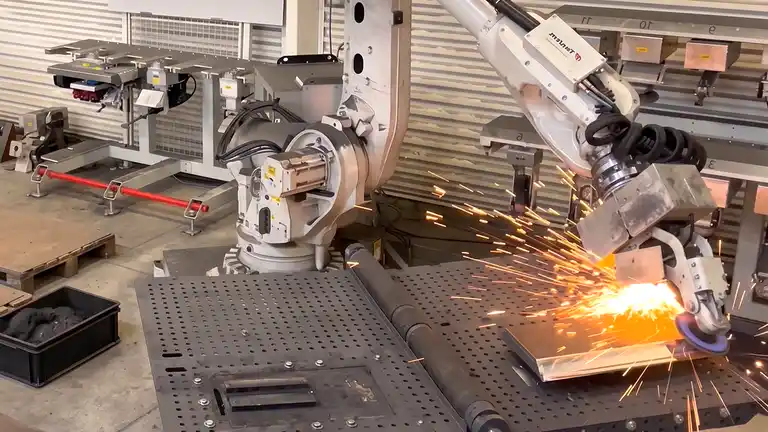
Manual and semi-automated beveling of flame-cut, plasma-cut, and laser-cut parts is labor-intensive, time-consuming, and often results in inconsistent quality. The Teqram EasyGrinder transforms this process. Using advanced AI-powered machine vision, the system automatically identifies each part, calculates the optimal grinding path, and produces precise, repeatable bevels, regardless of part size, distortion, or dimensional tolerances.

Programming and manual setup are no longer required. Based on predefined process recipes, the EasyGrinder automatically selects the appropriate tool and machining strategy to produce a wide range of bevel angles and profiles with consistent, repeatable quality.


EasyGrinder – Robotic Grinding
🔊 Sound on


How Automated Robotic Beveling Works

The entire beveling process is fully automated:

  • Parts are transported to the robotic system on a pallet, just as in the existing production process.
  • The integrated machine vision system automatically identifies the part's position, contour, and orientation.
  • The robot automatically selects the appropriate grinding tool for the required bevel.
  • Both internal and external contours are processed to the specified bevel angle.
  • The result is a clean, consistent bevel that is ready for welding.

Because the EasyGrinder processes only the areas that require beveling, it significantly reduces tool wear and energy consumption compared to through-feed systems. Fully automated loading and unloading eliminate the need for manual handling.


Automate Your Weld Beveling Process Today!

Manual weld beveling doesn't have to be time-consuming or labor-intensive. With the Teqram EasyGrinder, flame-cut, plasma-cut, and laser-cut parts can be beveled automatically with consistent quality, high precision, and no programming or manual teaching.

Whether you're looking to automate an existing production process or planning a new robotic cell, our team is ready to help you find the right solution for your application.

ContactBot_Teqram_1000x1000

Upload any relevant sketches, drawings, or other supporting documents here