 Deutsch
0 h
Teaching time per new part

Automate cutting, finishing, and material handling with vision-guided robotics—no part programming required, even with a high mix of parts.
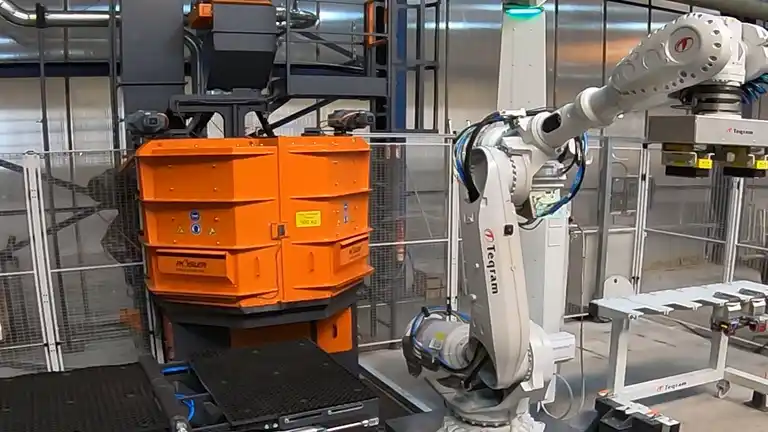
Robots and automated handling systems can support every stage of sheet metal production, from cutting, deburring, and grinding to part turning and welding. By automating repetitive, physically demanding tasks, manufacturers can reduce manual labor while maintaining the flexibility to process a wide variety of parts.
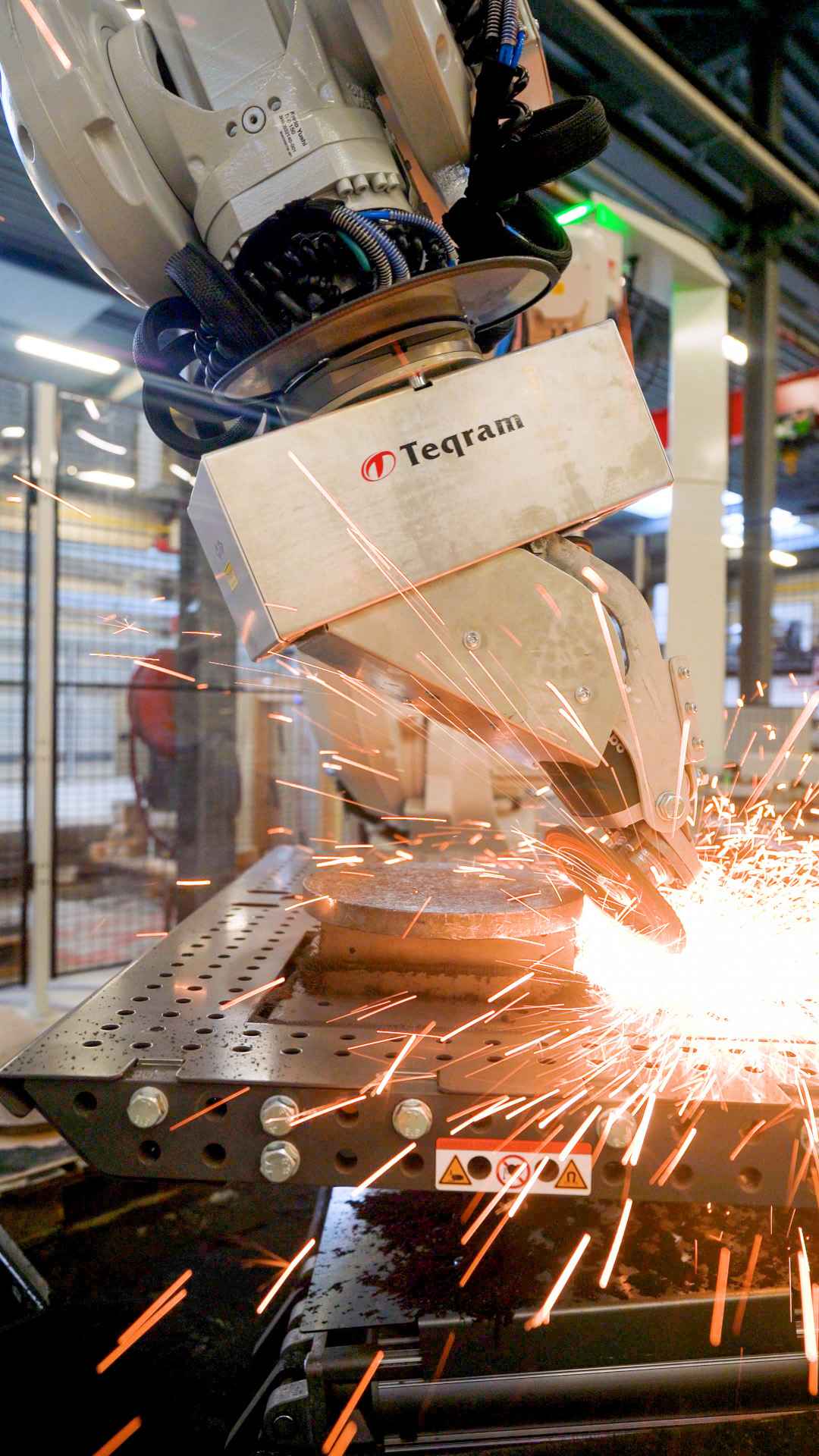
Skilled workers for deburring, grinding, and finishing are hard to find. Assigning them to repetitive tasks ties up expertise that could add more value elsewhere.
Small to medium production runs with varying part geometries make conventional automation difficult, since each new part requires its own program.
Customers expect reliable delivery and higher quality, while margins continue to tighten. Manual finishing is becoming increasingly difficult to justify.
Automation now extends across the entire production process, from design to finished assembly, connecting tasks that once relied on standalone machines.
Laser, plasma, and oxyfuel cutting turn sheet metal into part blanks.
Deburring, grinding, cleanup, and edge rounding bring parts to the required quality.
Part turning, machine loading and unloading, and sorting keep production moving between machines.
Welding and other joining processes bring individual parts together into a finished assembly.
Achieving consistent, burr-free surfaces across a wide range of part geometries.
The system uses machine vision to identify each part, then deburrs edges, grinds contours, and fine-finishes surfaces to preset quality levels.
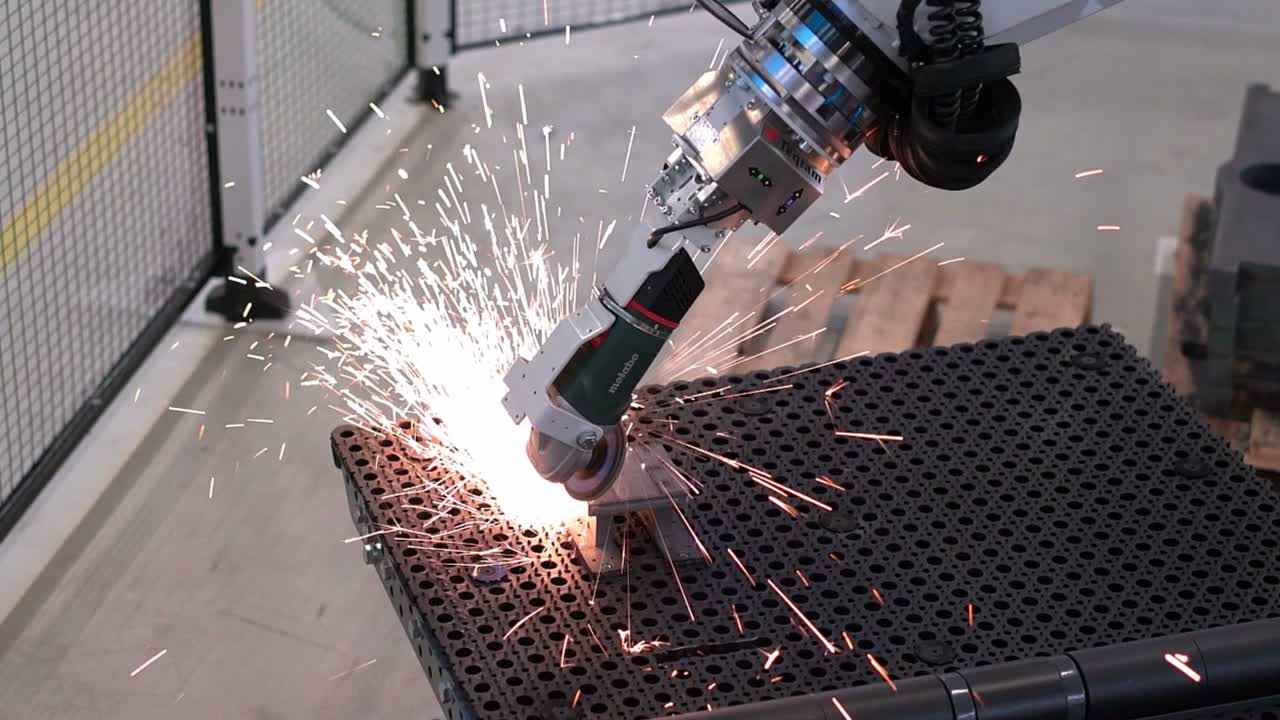
Loading and unloading deburring machines while handling a high mix of parts.
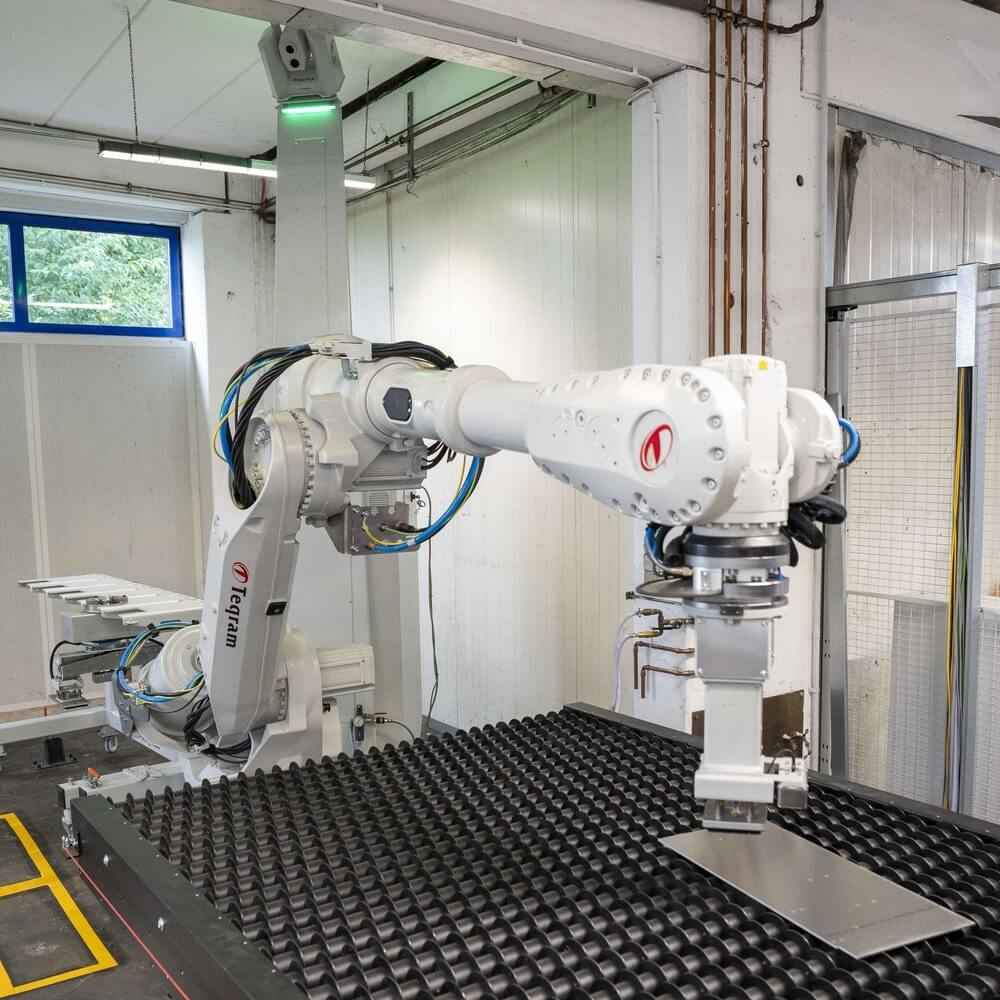
The system automatically loads and unloads the through-feed deburring machine, turning parts over when both sides need processing on a single-sided machine. For thicker material, the EasyGrinder also handles cut lead-in areas or grinds the heat-affected zone.
Handling a variety of welding jobs without time-consuming programming for each part.
Operators teach the cobot by guiding it by hand instead of writing code. Setup takes just minutes, with no safety fencing required.
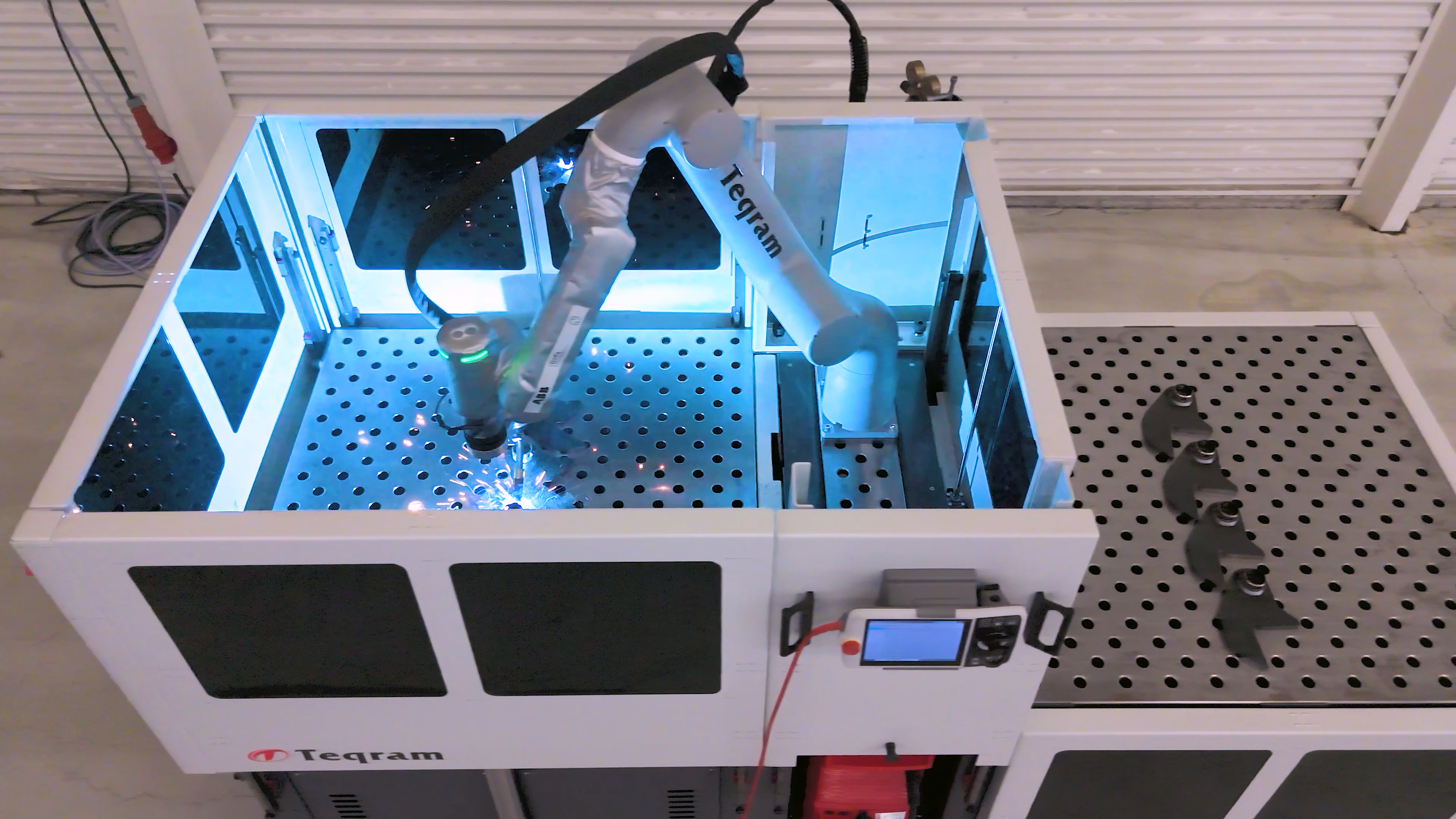
Achieving consistent surface preparation before painting or coating.
The system automatically loads the rotary-table shot blasting machine and turns parts over, working directly with the grinding cell.
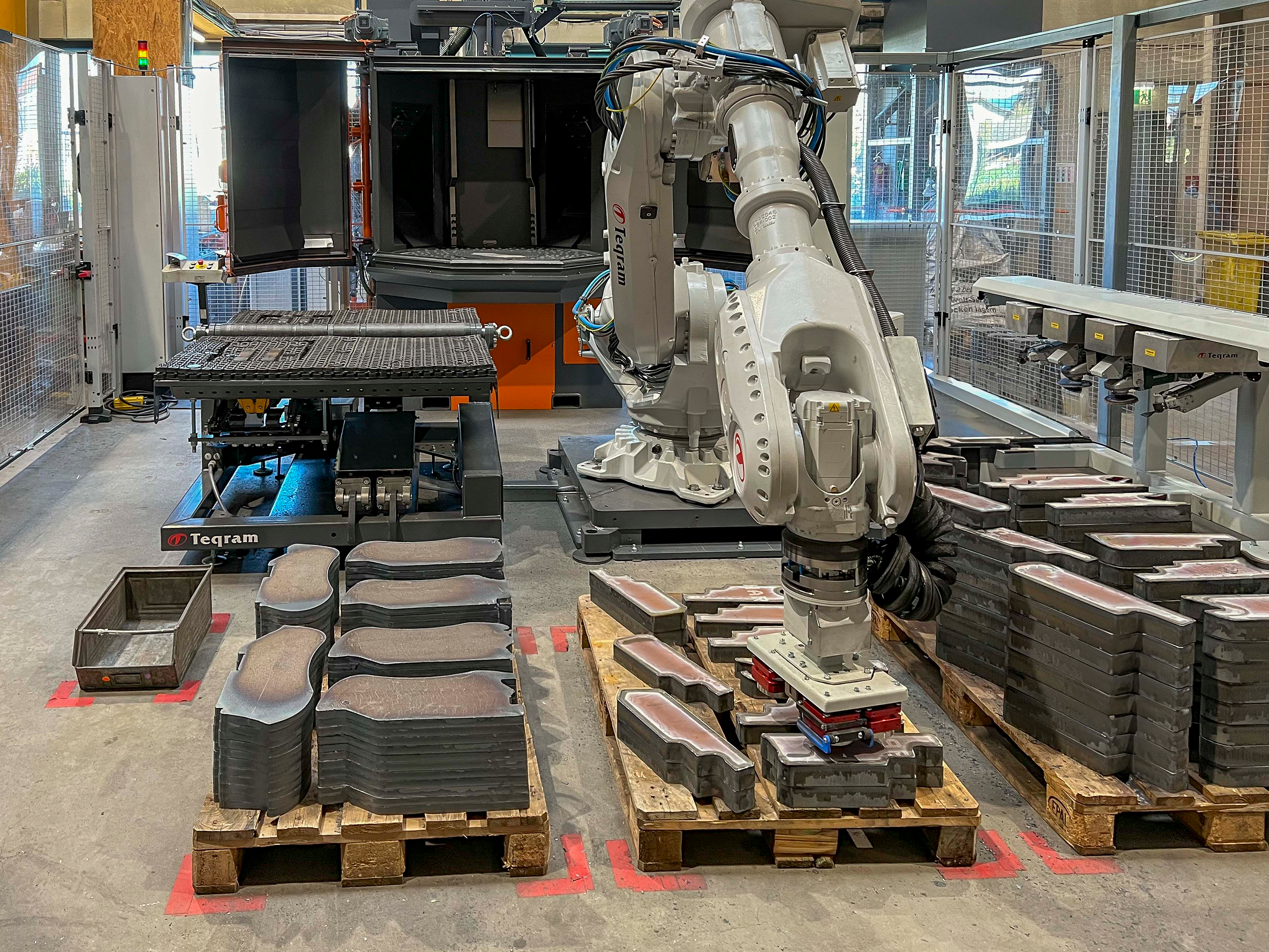
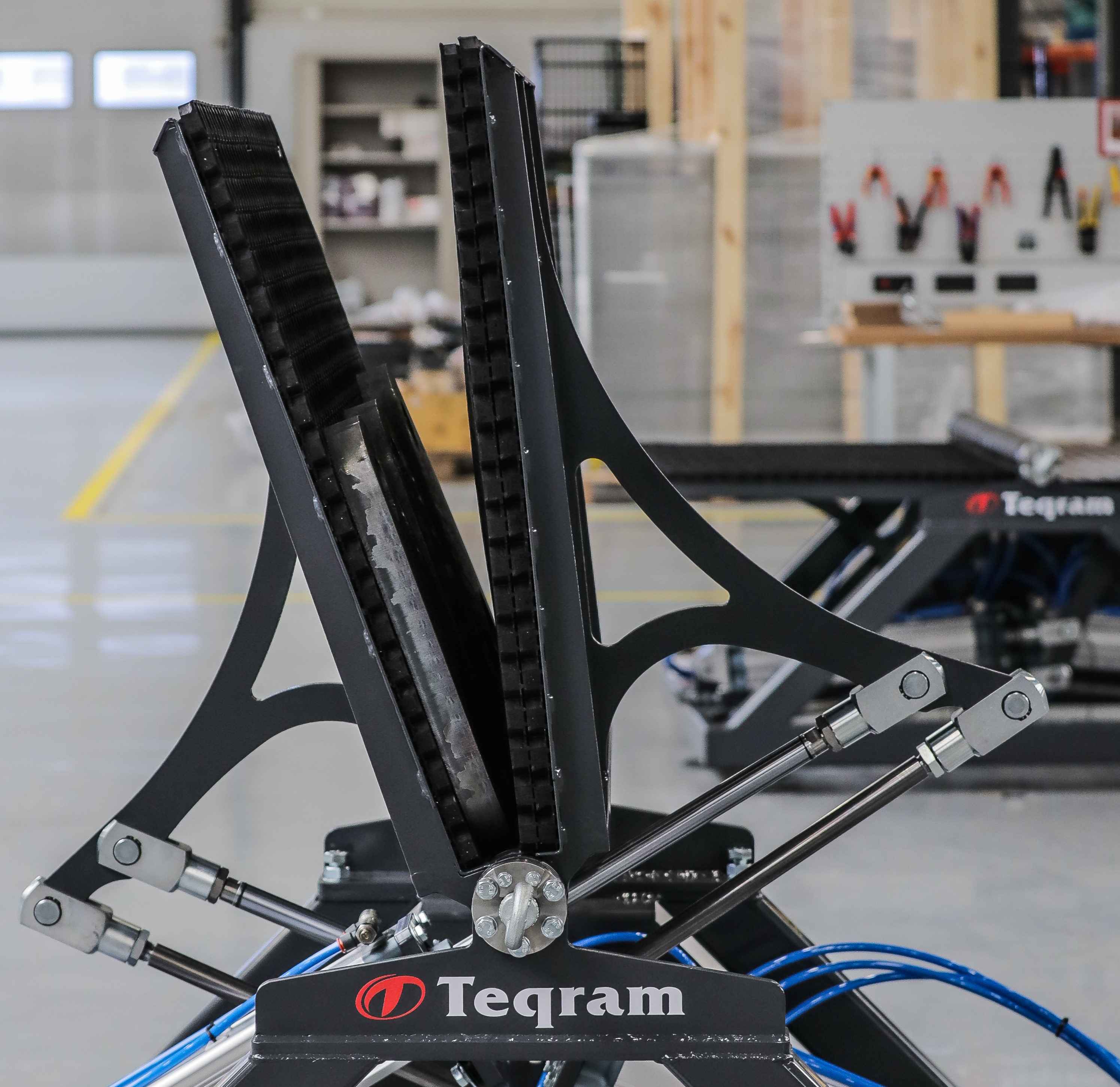
Safely turning over heavy or long sheet metal parts between operations.
The system turns, transfers, and precisely positions parts for the next step, whether that means processing the other side, painting, or assembly.
Talk to us about a solution tailored to your needs.
Traditional industrial robots require a separate program for each new part. In high-mix production, that programming adds up fast. Teqram uses 3D vision and AI to recognize parts automatically.
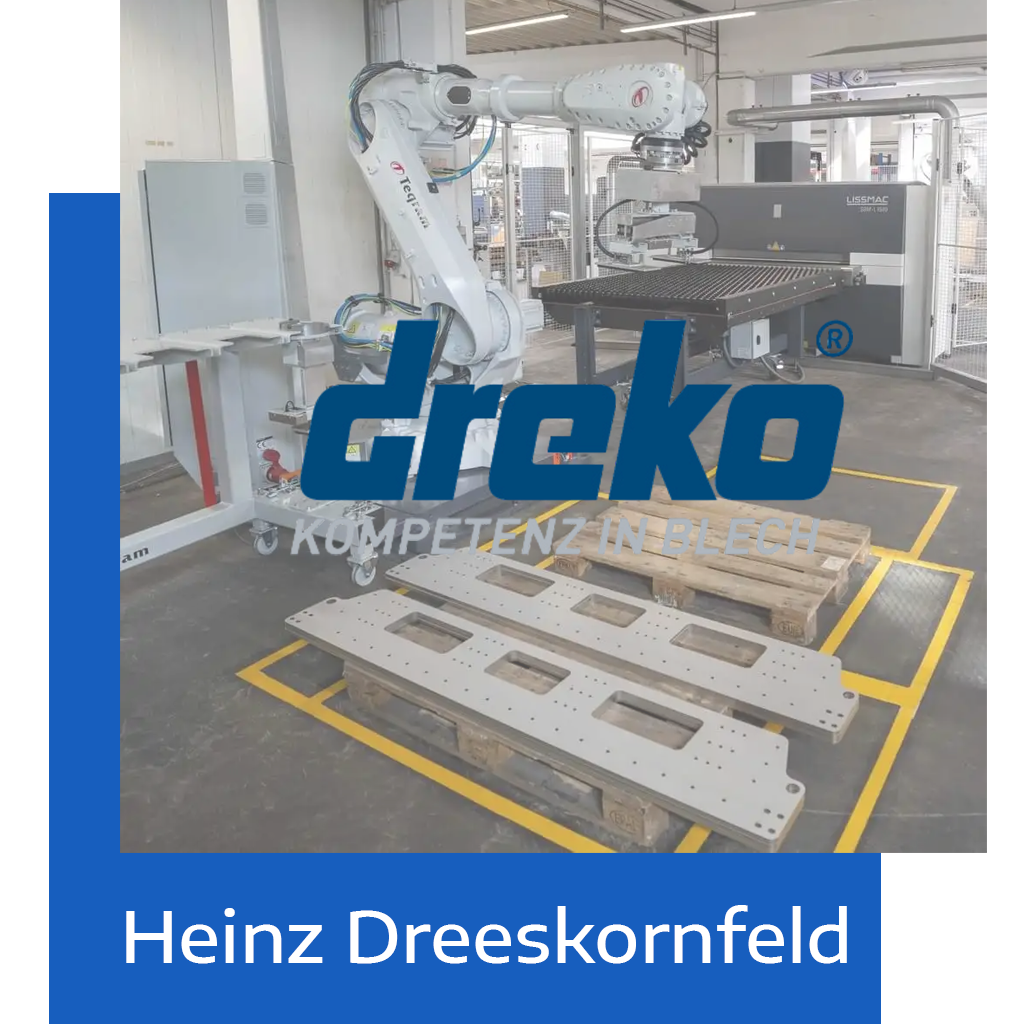
Heinz Dreeskornfeld GmbH & Co. KG · Bielefeld
This laser cutting and sheet metal fabrication specialist uses EasyDebur to automate deburring machine loading and unloading. The result: significantly less manual work, consistently reliable production, and cost-effective automation even for small batches with a high mix of parts.
Read the Full Case Study →
WBM Staalservice Centrum BV · Stramproy
Specializing in complex parts made from high-strength and wear-resistant steel, WBM turns parts weighing up to 300 kg and measuring up to 6 m long in seconds, with just one operator. The result: a safer workplace, less physical strain, and a more reliable deburring process.
Read the Full Case Study →
Zucker Edelstahlschmiede GmbH · Wolpertshausen
This stainless steel and sheet metal specialist in Germany's Schwäbisch Hall region uses EasyDebur-1 to load its ARKU deburring machine without CAD data, drawings, or manual teaching. The result: less strain on employees, steady throughput, and cost-effective automation even for small batches.
Read the Full Case Study →Conventional robotic automation typically requires larger production runs to justify the cost of programming each part. Teqram's vision-guided systems recognize parts automatically, making automation cost-effective even for small batches with a high mix of parts.
Many manufacturers start with deburring, grinding, or part turning. These repetitive, physically demanding tasks are good candidates for automation and can be automated separately from other manual operations.
With conventional industrial robots, yes. Teqram systems use 3D vision to recognize parts automatically, with no CAD data or part-specific programming required.
