Deutsch
0 h
Programming Time per Part

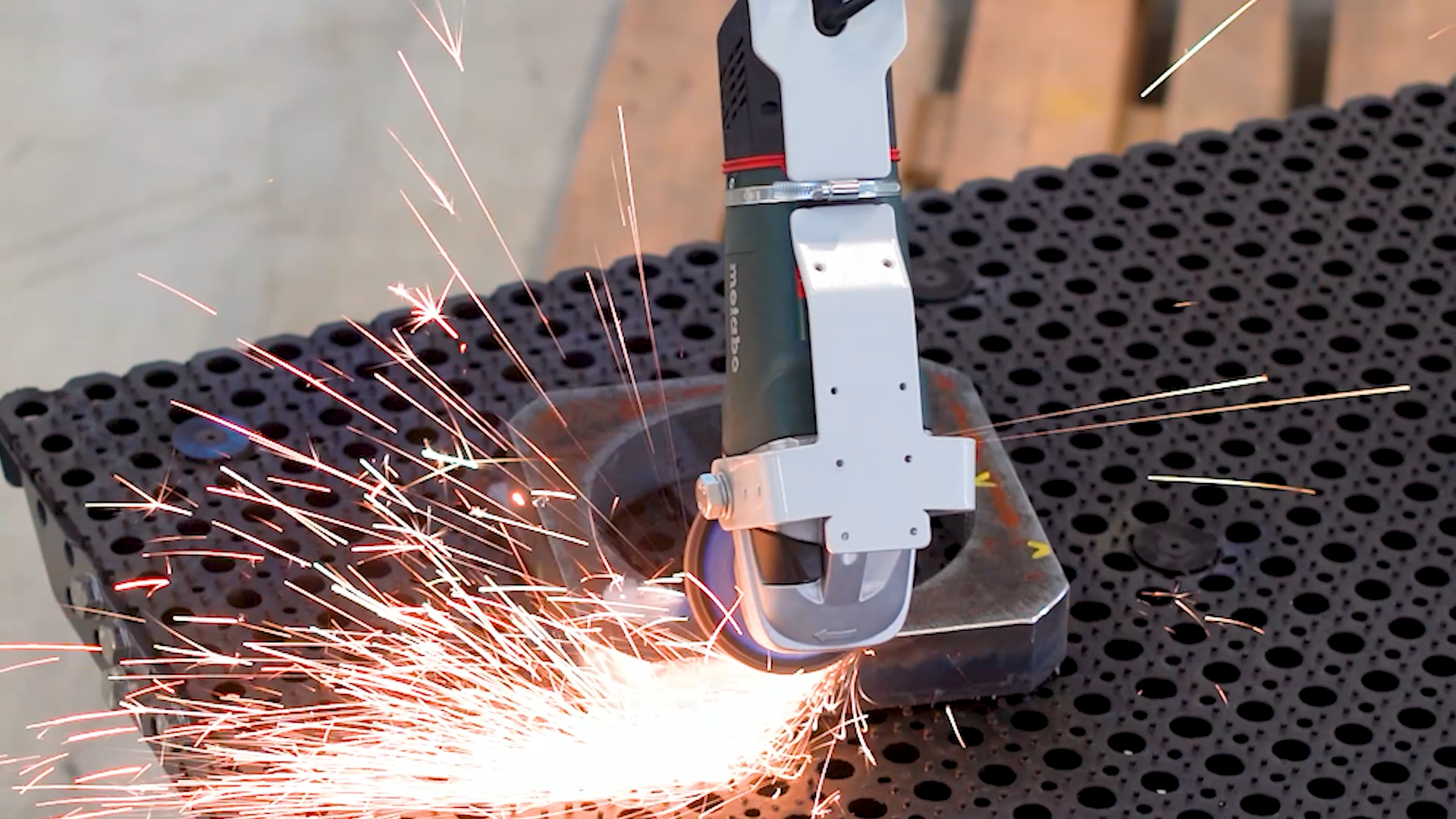
Vision-guided robotics handles grinding, deburring, and blasting of flame-cut and plasma-cut parts—with no programming required, repeatable P3 quality, and significantly less physical strain on employees.
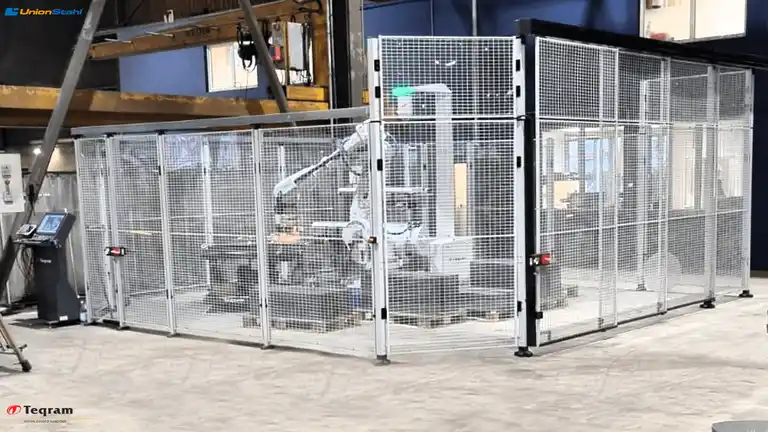
Stricter standards, a tight skilled labor market, and growing deadline pressure are pushing structural steel fabricators to rethink production. Automation now extends well beyond CAD-based planning to the shop floor, where components are cut, ground, deburred, blasted, and assembled. Vision-guided robotics performs these tasks autonomously, delivering repeatable quality, reducing the workload on employees, and giving fabricators a clear competitive advantage.
Stricter project specifications
Projects specifying preparation grade P3 under DIN EN ISO 8501-3 call for rounded edges (R2) and complete removal of heat-affected zones—requirements regularly specified by customers such as Deutsche Bahn, Germany’s rail operator.
Skilled labor shortages
Grinding, deburring, and blasting are among the most physically demanding tasks in plate and sheet metal fabrication. Experienced workers are tied up with repetitive finishing work instead of higher-value tasks.
Cost and deadline pressure
Inconsistent manual grinding leads to rework, higher abrasive consumption, and unpredictable cycle times. Every variation costs time, material, and profit.
Automation in structural steel fabrication starts well before the shop floor. Ideally, it spans the entire project, from digital planning to on-site erection. Three key areas define this process:
Software such as Tekla Structures and parametric CAD systems automatically generates drawings, bills of materials, and machine data from the 3D model, reducing production preparation time.
Vision-guided robotics handles welding, grinding, deburring, and blasting of previously cut components—with repeatable results, no CAD data, and no programming required. This is where Teqram comes in.
Intelligent control systems connect material storage, cutting operations, and assembly areas, ensuring components are in the right place at the right time.
Automation in structural steel fabrication doesn’t have to be an all-or-nothing investment. The biggest gains often come from tasks that have traditionally been done by hand:
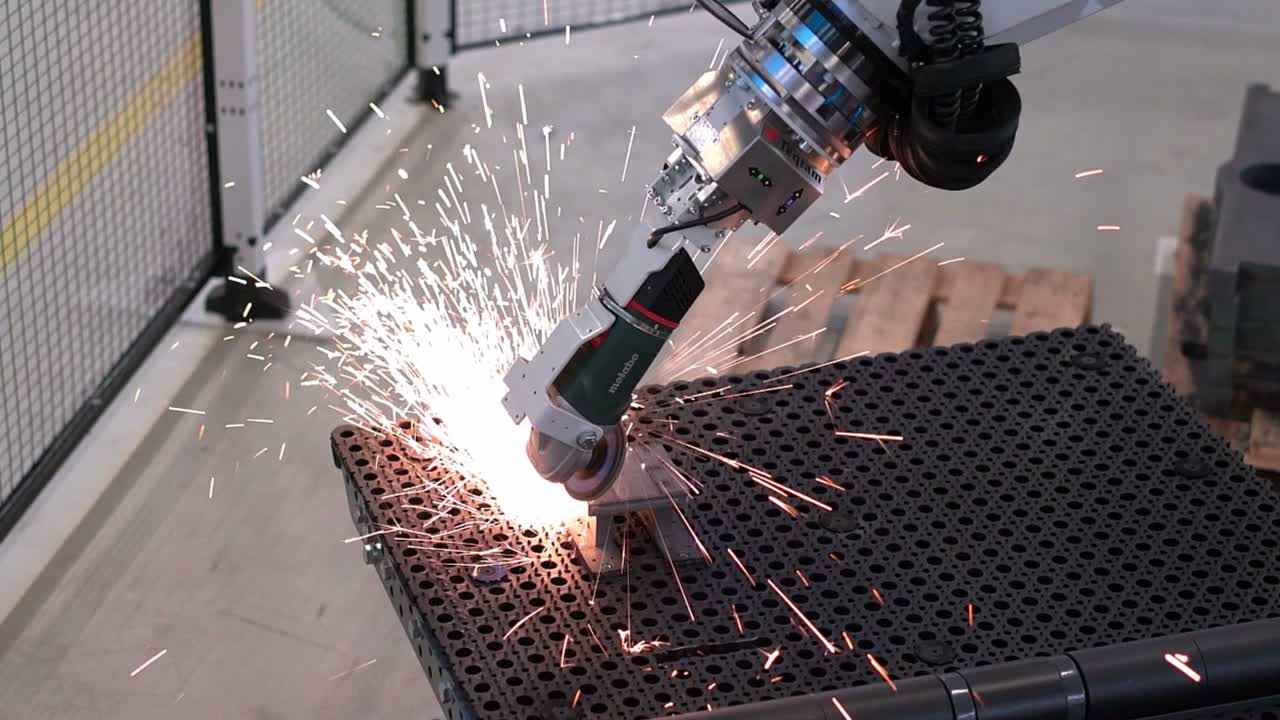
Vision-guided grinding robot · Edge deburring, contour grinding, and fine finishing
EasyGrinder: Learn more about EasyGrinder →
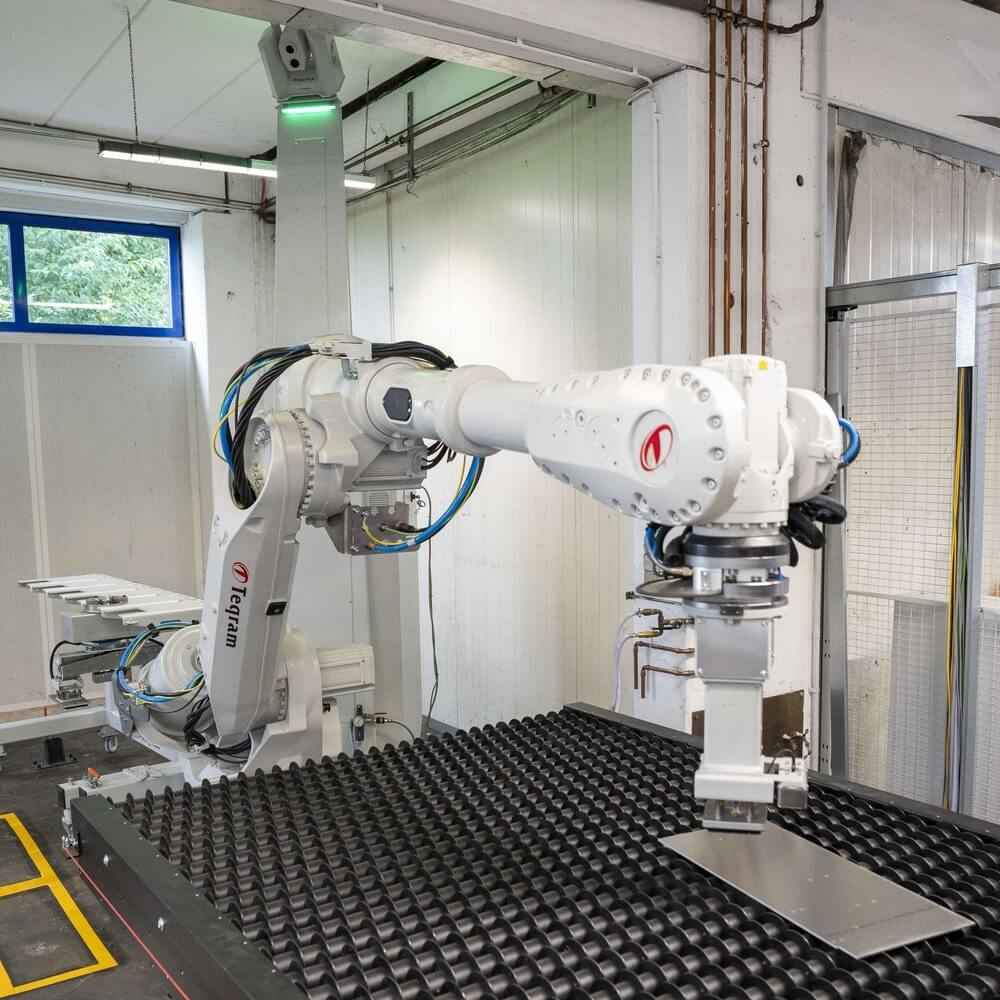
Automated loading and unloading · Through-feed deburring machine
EasyDebur: Learn more about EasyDebur →
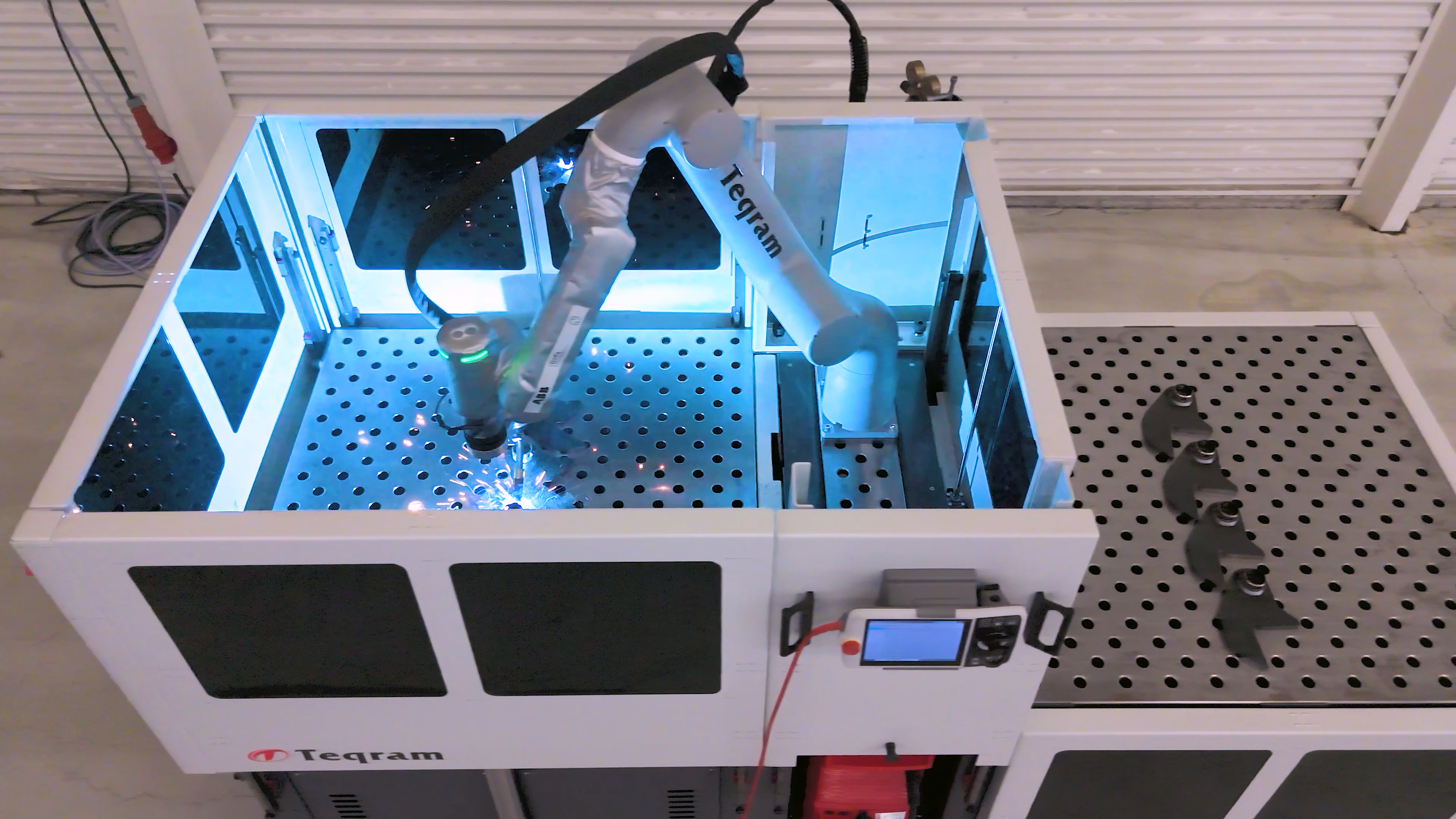
Cobot welding · Hand-guided teaching instead of programming
EasyWelder: Learn more about EasyWelder →
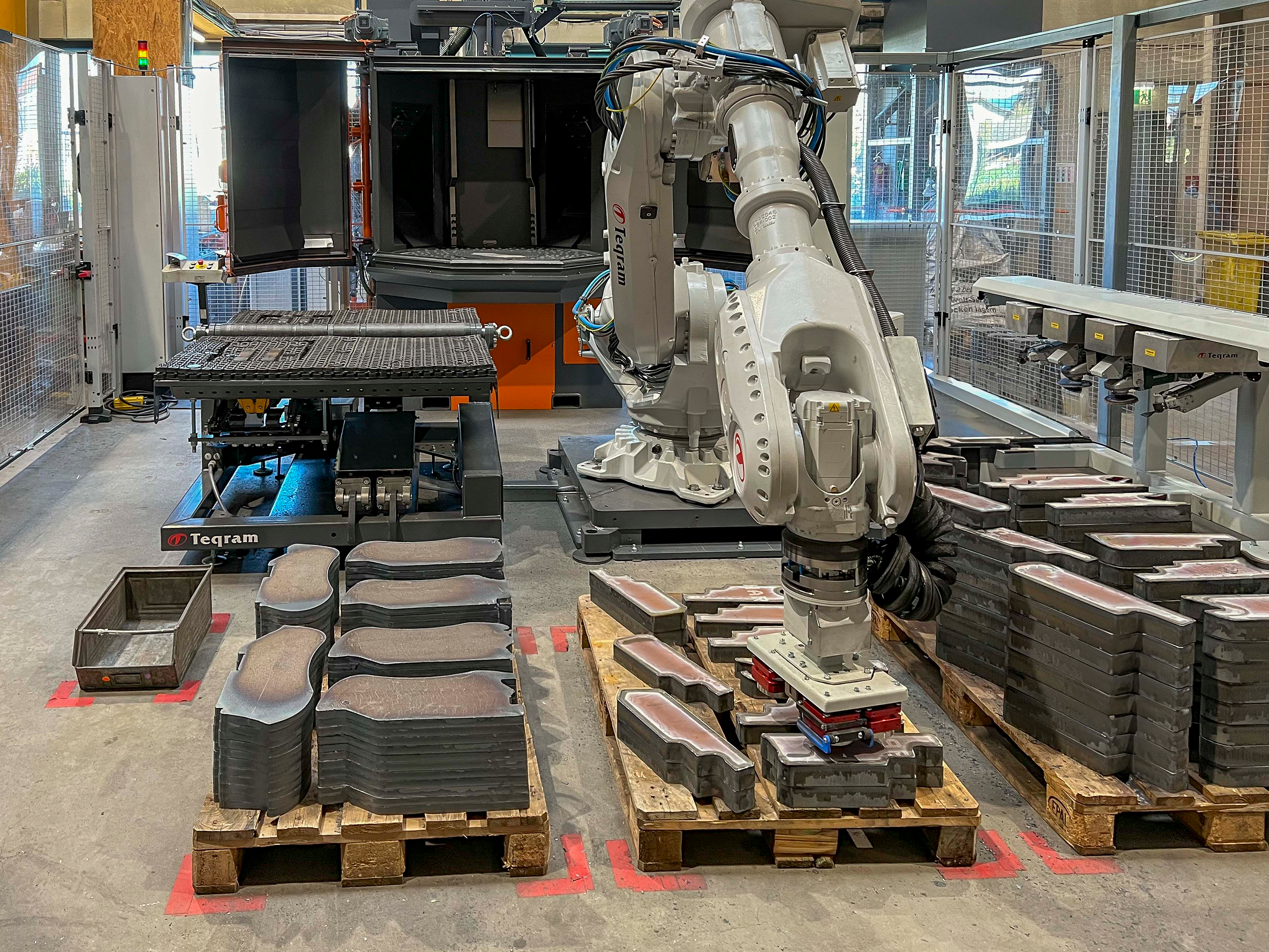
Automated loading · Rotary table shot blasting machines
EasyShotblaster: Learn more about EasyShotblaster →
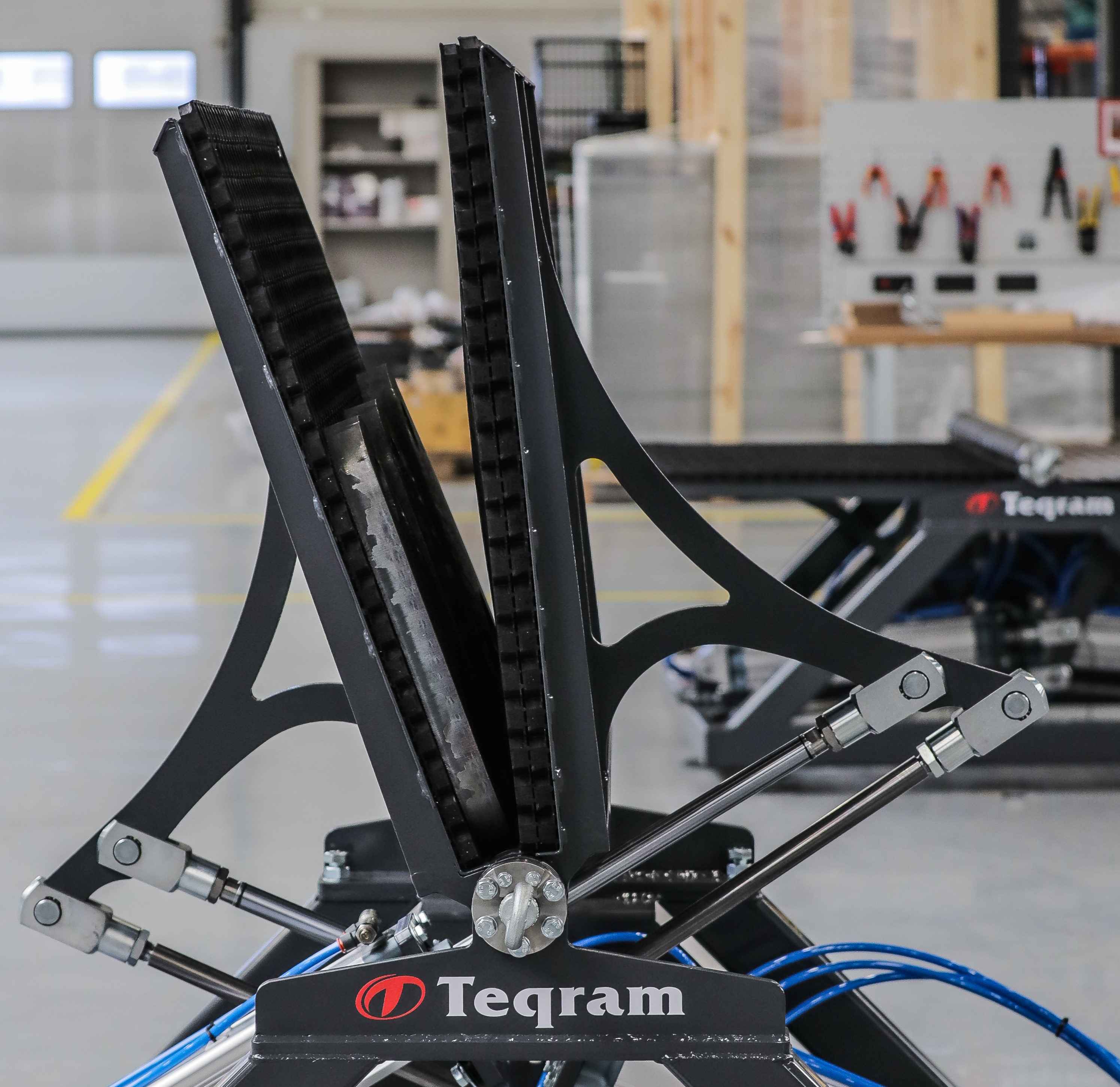
Automated part flipping, feeding, and positioning
EasyFlipper: Learn more about EasyFlipper →
This makes the systems particularly cost-effective for one-off parts and small production runs typical of structural steel fabrication, where conventional robot programming often isn’t economical.
Beveling doesn’t have to be a time-consuming manual task. With Teqram’s EasyGrinder, you can fully automate weld preparation for flame-cut, plasma-cut, and laser-cut parts—with repeatable results that meet applicable standards, no programming, and no physically demanding manual work.
While the CAD/BIM solutions discussed earlier focus on planning, Teqram brings automation directly to the shop floor:
From long-established businesses to steel fabricators serving customers across Europe, automated grinding and deburring delivers measurable benefits. Here are three examples from Teqram customers:
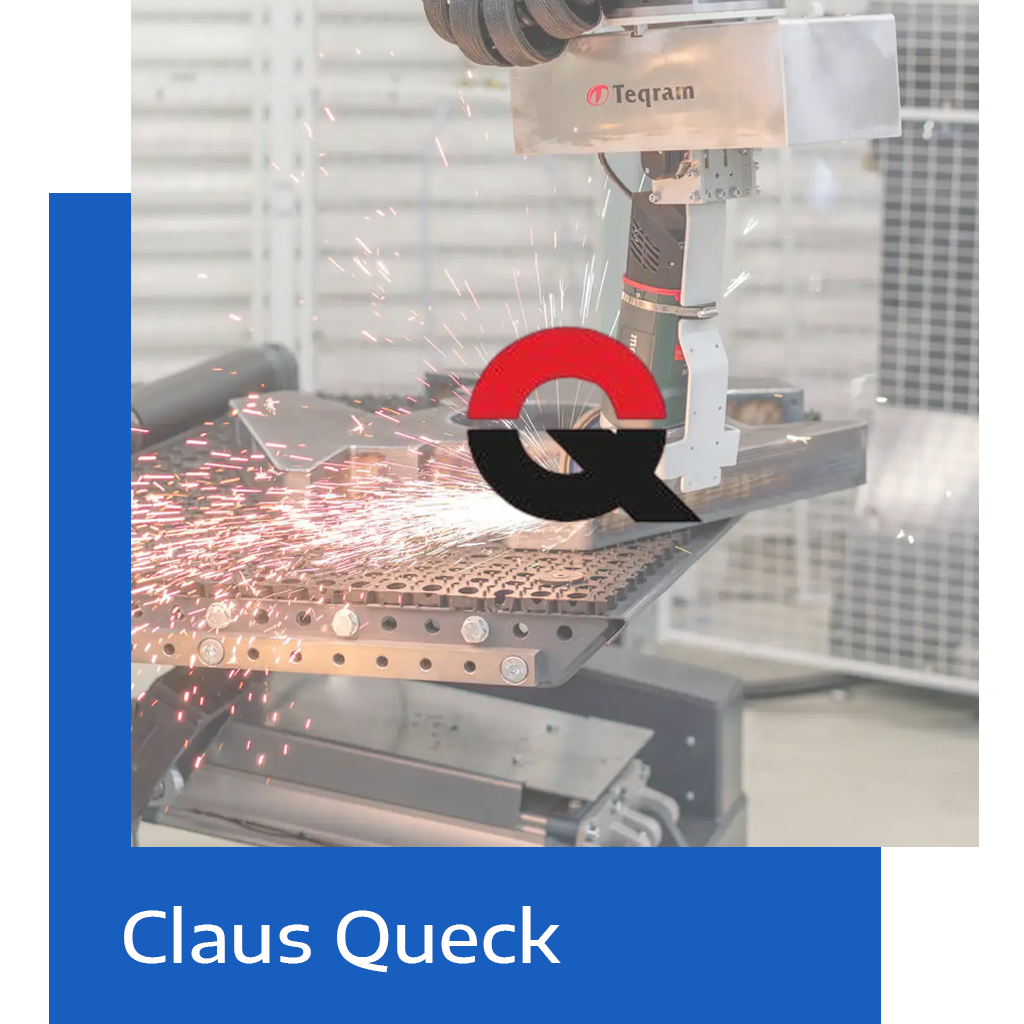
Claus Queck GmbH · Düren
This structural steel specialist, whose projects include components for the Formula 1 circuit in Abu Dhabi and Hamburg’s Elbe Tunnel, automated the deburring and grinding of flame-cut and plasma-cut parts weighing up to 200 kg (441 lb). The result: repeatable P3 quality that meets Deutsche Bahn’s requirements and significantly less physical strain on skilled workers.
Read the full case study →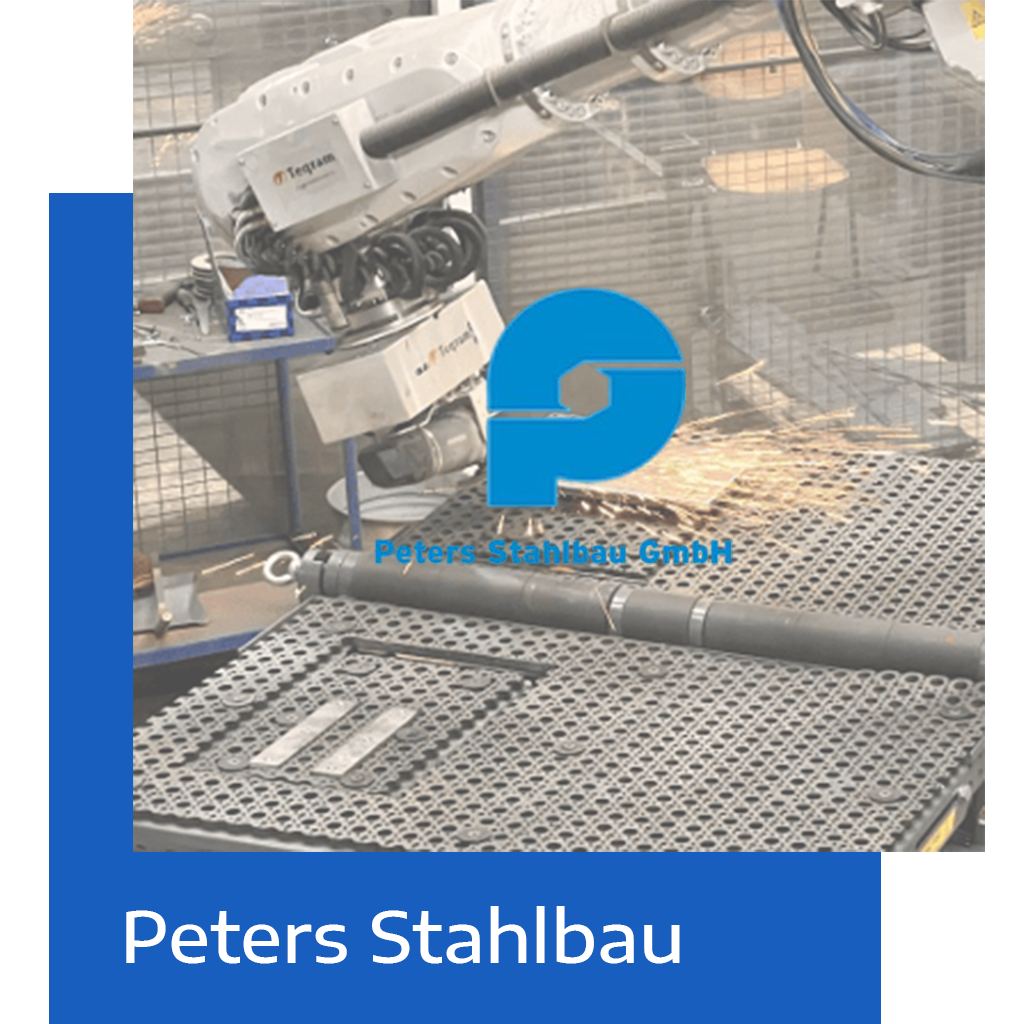
Peters Stahlbau GmbH · Itterbeck
Serving customers throughout Europe, this steel fabricator with approximately 180 employees automates edge rounding and heat-affected zone removal on parts up to 1,200 × 800 mm (47.2 × 31.5 in) and 200 kg (441 lb). The EasyGrinder delivers repeatable results across multiple shifts while significantly reducing abrasive consumption.
Read the full case study →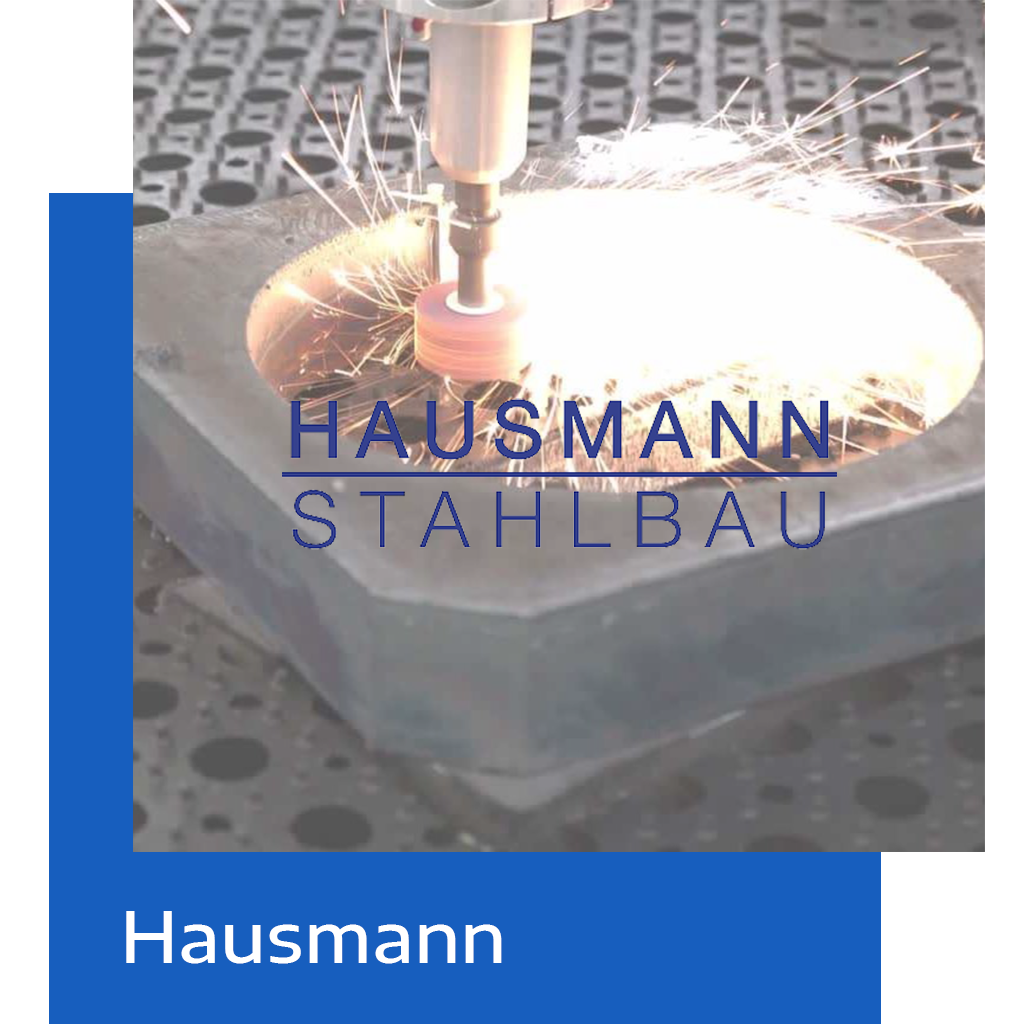
Hausmann GmbH & Co. Stahlbau KG · Aichach
Family-owned since 1946, Hausmann fully automates the deburring and finishing of thermally cut parts weighing 5–150 kg (11–331 lb) and measuring up to 1,000 × 1,000 mm (39.4 × 39.4 in). The system runs around the clock, processing parts to preparation grade P3 in a dust and noise control enclosure powered by solar energy.
Read the full case study →Yes. Vision-guided robotics automatically recognizes each part’s geometry without CAD data or part-specific programming. Unlike conventional robot cells with fixed programs, this makes it particularly well suited to one-off parts and small production runs in structural steel fabrication.
Relevant standards include DIN EN ISO 8501-3 (preparation grades P1–P3), DIN EN 1090-2 (execution of steel structures), and DIN EN ISO 12944-2 (corrosivity categories). Automated systems can be configured to meet the applicable requirements and deliver repeatable results that can be documented.
No specialized robot programming skills are needed. Systems that require no programming or robot teaching can be run by equipment operators, typically by selecting the desired processing quality. Operators can usually learn to use the system within a few days.
Robotic grinding, deburring, and blasting cells can typically fit into existing shop layouts without major modifications. Standard interfaces such as OPC UA connect them to upstream and downstream equipment.
Yes. Vision-guided robotic cells are enclosed and equipped with safeguards. They keep employees away from sparks, grinding dust, and process noise while taking over heavy lifting, helping prevent accidents and protect employee health on the shop floor.